
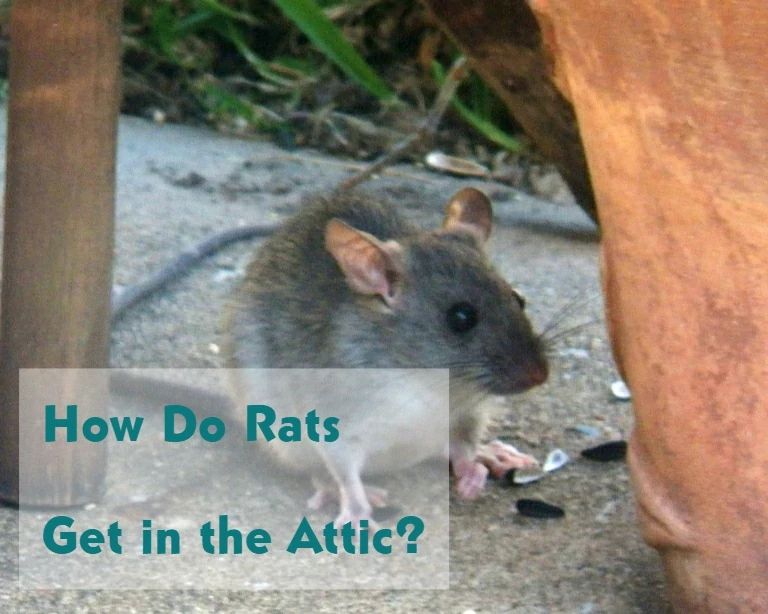
Finding rats in your attic is one of those nightmare situations for homeowners. You might hear scratching and scurrying sounds above your ceiling at night, or worse, you might actually spot one running around up there.
Understanding how these pests are getting in is the first step to getting rid of them. How do rats get in the attic?
Rats get into attics by climbing exterior walls and squeezing through small openings in your roofline, including gaps around roof vents, damaged soffit areas, holes near the chimney, openings where utility lines enter, and spaces in roof edges or eaves. They only need a hole the size of a quarter to squeeze through.
Once rats find a way into your attic, they’ll keep using that same entry point and probably invite their friends and family. Attics make perfect homes for rats because they’re warm, dry, quiet, and full of nesting materials. That’s why it’s so important to find and seal those entry points.
The Most Common Entry Points Rats Use
Rats are really good at finding weak spots in your home’s defenses. They don’t need a huge hole to get in, just a gap big enough to fit their skull through.
- Roof vents are one of the top entry points.
The vents on your roof (for your bathroom, kitchen, or attic ventilation) often have screens or louvers that are supposed to keep pests out.
But over time, these screens can rust, tear, or come loose. Rats will chew through damaged screens or squeeze through gaps around the vent housing.
- Soffit and fascia gaps are another major problem.
The soffit is the underside of your roof overhang, and the fascia is the vertical board that runs along the roof edge.
Where these meet, there are often small gaps or holes. As wood ages, warps, or gets damaged by weather, these gaps get bigger. Rats will find them and squeeze right through.
Roof edge and eave openings happen when shingles don’t quite meet the edge of the roof properly, or when the drip edge is damaged or missing. Even a small gap along the roof edge can let rats in.
- Chimney gaps are super common.
The area where your chimney meets your roof needs to be sealed with flashing (metal strips), but this flashing can crack, rust, or come loose over time. Rats will climb up your chimney’s exterior and slip through any gaps in the flashing.
- Utility line entry points are basically open invitations for rats.
Anywhere that cables, wires, or pipes enter your house, there’s usually a hole drilled through the exterior. If these holes aren’t sealed properly around the utility lines, rats can squeeze through the gaps.
Gable vents at the ends of your attic are usually covered with louvers or screens, but these can get damaged. A broken gable vent is like leaving a door open for rats.
How Rats Actually Reach Your Roof
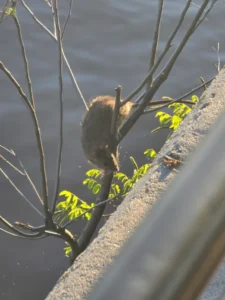
Before rats can get into your attic, they need to get onto your roof. Rats are excellent climbers, and they have several ways to reach high places.
- Tree branches are the most common route.
If you have trees near your house with branches that overhang your roof or come within a few feet of it, rats will use them as bridges.

They’ll climb the tree and either walk out onto the branch and drop onto your roof, or jump if the gap is small enough.
- Climbing the exterior walls works when the siding is textured or rough.
Brick, stucco, wood siding, and stone all give rats enough grip to climb straight up. They’ll scale the wall like it’s nothing and pop right onto your roof.
- Utility lines work like tightropes for rats.
Power lines, phone lines, and cable TV wires that connect to your house provide easy highways for rats to travel. They’ll walk along these lines from utility poles or nearby buildings straight to your home.
- Downspouts and gutters are basically ladders.
Rats will climb up the outside of downspouts or use gutters to move around the perimeter of your roof looking for entry points.
- Ivy and climbing plants on your walls give rats both grip and cover.
They can climb up through the vegetation and reach your roof without ever being exposed to predators.
- Stacked firewood, sheds, or other structures near your house become stepping stones.
Rats will climb onto these objects first, then jump or climb from there onto your roof.
Why Rats Choose Attics
Understanding why rats love attics so much helps explain why they work so hard to get in there.
Attics are warm and protected from the weather. Rats need shelter from rain, snow, and extreme temperatures. Your attic provides all of that. The insulation makes it even better by keeping the space warm in winter.
There’s usually little to no human activity in attics. Most people only go up there a few times a year, if that. This means rats can live undisturbed, which is exactly what they want.
Attics have plenty of nesting materials. Insulation, cardboard boxes, old clothes, paper, and other stored items give rats everything they need to build comfortable nests.
The height provides safety from ground predators. Cats, dogs, and other animals that might hunt rats usually can’t reach attics. Rats feel safer up high.
Attics often connect to other parts of the house through gaps, pipes, or wiring chases. This gives rats access to your main living areas where they can find food and water at night.
What Time of Year Do Rats Get Into Attics?
Rats can invade attics any time of year, but there are peak seasons when it’s more likely to happen.
Fall is the busiest time for attic invasions. As temperatures drop, rats start looking for warm places to spend the winter. Your cozy attic is way more appealing than being outside in the cold.
Winter keeps rats indoors once they’ve found a good spot. If rats got into your attic in the fall, they’re definitely staying through winter. You might notice more activity during cold snaps when they’re all huddled together.
Spring brings a surge in rat activity because this is breeding season. Female rats look for safe places to have their babies, and attics are perfect nurseries. If you have rats in your attic during spring, you might soon have a lot more rats.
Summer is usually slower, but rats will still move in if they’re looking for a place to escape extreme heat or if they’ve been displaced from another location.
The key thing to remember is that once rats establish themselves in your attic, they don’t leave just because the seasons change. They’ll stay year-round if you let them.
Signs That Rats Have Gotten Into Your Attic
You might not actually see the rats, but they leave plenty of evidence behind.
- Scratching and scurrying noises, especially at night, are the most obvious sign.
Rats are nocturnal, so you’ll hear them moving around after dark. The sounds might be running, scratching, gnawing, or even squeaking.
- Droppings in your attic are unmistakable.
Rat droppings are dark brown or black, capsule-shaped, and about half an inch long. Fresh droppings are soft and shiny, while old ones are hard and dull.
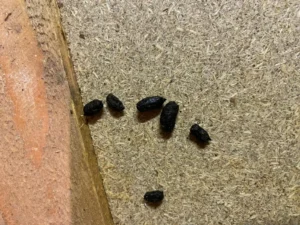
You’ll usually find them along walls, near nesting areas, or around food sources.
- Chewed wires, wood, or insulation show where rats have been gnawing.
Rats have to chew constantly to keep their teeth from growing too long. They’ll chew on anything, including electrical wiring (which is a fire hazard).
- Greasy rub marks along walls and beams appear because rats have oily fur.
When they repeatedly use the same paths, they leave dark, greasy smears on surfaces.
- Nests made from shredded insulation, paper, fabric, or other materials indicate rats are living and possibly breeding in your attic.
These nests are usually tucked into corners or hidden under insulation.
- A strong, musky odor in your attic or in rooms below it comes from rat urine and droppings.
The smell gets worse as the infestation grows.
- Actual sightings of rats running around your attic or on your roof at night are the most definitive proof.
Even seeing one rat means there are probably more hiding.
How to Find Where Rats Are Getting In
Finding the entry point is critical, but it’s not always easy. Rats are sneaky, and their entry holes might be in hard-to-see places.
1. Do an exterior inspection of your entire roofline.
Walk around your house and look up at the roof edges, soffit areas, and anywhere that different materials meet. Look for gaps, holes, or damage.
2. Check all vents carefully.
Roof vents, gable vents, and soffit vents should all have intact screens or covers. Look for any signs of chewing, rust, or damage.
3. Examine the areas around your chimney where the flashing meets the roof and siding.
Gaps here are very common as houses settle and materials age.
4. Look at where utility lines enter your home.

Follow electrical wires, cable lines, and pipes to see where they penetrate your walls or roof. Check if the holes are sealed.
5. Inspect your gutters and roof edges for gaps or damage.
Sometimes the problem is right along the roof edge where shingles meet the fascia.
6. Do an interior inspection of your attic.
Go up there with a flashlight and look for light coming through holes. Any light coming in means there’s a hole big enough for rats to use.
7. Look for signs of rat activity inside the attic.
Find where the droppings are concentrated. This tells you which areas the rats are using most, and the entry point is probably nearby.
8. Use flour or talcum powder as a tracking tool.
Sprinkle it in suspected areas and check back later for footprints. This can help you track the rats’ movements and figure out where they’re coming from.
What to Do Once You Find the Entry Points
Finding the holes is only half the battle. You need to seal them properly, or rats will just come back.
Don’t seal the holes immediately if there are still rats inside. You’ll trap them in your attic, and they’ll either die there (causing a horrible smell) or chew their way out through your ceiling into your living space.
Set traps first to catch the rats that are already inside. Use snap traps baited with peanut butter or bacon. Place them along walls where you’ve seen droppings or signs of activity.

Check traps daily and remove any caught rats. Keep trapping until you go several days without catching anything. This means you’ve gotten them all.
Now you can seal the entry points. Use materials that rats can’t chew through. Steel wool stuffed into gaps works for small holes. Cover it with caulk or expanding foam to hold it in place.
For larger holes, use hardware cloth (wire mesh with small openings) or metal flashing. Cut it to size and secure it with screws. Make sure there are no gaps around the edges.
Trim tree branches so they’re at least six to eight feet away from your roof. This removes the bridges rats use to reach your house.
Install vent covers or screens on any vents that don’t have them. Make sure existing screens are in good repair.
Apply metal flashing or repair existing flashing around your chimney. Make sure all gaps between the chimney and roof are sealed.
Seal around utility lines where they enter your home. Use caulk, foam, or metal covers designed for this purpose.
Should You Call a Professional?
Some attic rat problems are manageable on your own, but others really need professional help.
If the infestation is large (you’re seeing lots of rats or tons of droppings), professionals have the tools and experience to handle it quickly and safely.

If you can’t find the entry points, pest control experts have inspection tools like thermal cameras and borescopes that can locate hidden gaps.
If rats have damaged wiring in your attic, this is a serious fire hazard. Professionals can assess the damage and you’ll need an electrician to repair it.
If you’re not comfortable climbing on your roof or crawling around your attic, don’t risk it. Professionals do this every day and have the right equipment.
If you’ve tried everything and rats keep coming back, there might be entry points you’re missing or problems with how you’re sealing things up. Pros can figure out what’s wrong.
Preventing Rats From Getting Into Your Attic Again
Once you’ve gotten rid of the rats and sealed the entry points, you want to keep them from coming back.
- Do regular exterior inspections of your home, especially before fall when rat activity increases.
Look for any new damage or gaps that might have developed.
- Keep your yard maintained.
Trim bushes and trees away from your house, don’t let vegetation grow up against your walls, and remove any debris or junk that rats could use for cover.
- Store firewood away from your house.
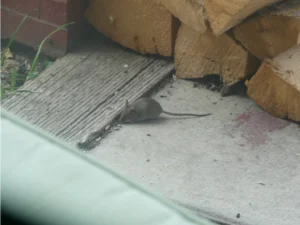
Keep it at least 20 feet from your home’s foundation and off the ground on a rack.
- Don’t leave pet food outside overnight.
Bring pet bowls in after your animals eat, or rats will help themselves.
- Secure your garbage cans with tight-fitting lids.
Rats can smell food from far away, and overflowing or open trash cans are like dinner bells.
- Fix any water leaks or standing water around your home.
Rats need water daily, so removing water sources makes your property less attractive.
- Keep your attic organized and clutter-free if possible.
The more stuff you have stored up there, the more hiding and nesting spots you’re providing for rats.
What Damage Can Rats Do In Your Attic?
Rats aren’t just creepy and annoying. They can actually cause serious damage if left unchecked.
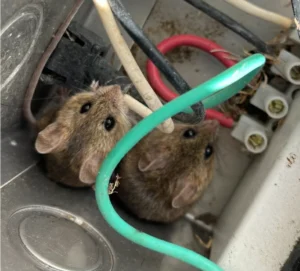
Electrical fire risk is the most dangerous issue. Rats chew on wiring, which can expose live wires and cause short circuits or fires. This happens more often than you’d think.
Insulation damage reduces your home’s energy efficiency. Rats will burrow through insulation, compress it, and contaminate it with urine and droppings. Damaged insulation doesn’t work as well, which means higher heating and cooling bills.
Structural damage can occur when rats chew on wood beams, rafters, and framing. While one rat won’t bring down your house, a large infestation over time can weaken structural supports.
Contamination from urine and droppings creates health hazards. Rat waste can carry diseases, and the smell can seep into your living spaces below.
Damage to stored items happens when rats chew through boxes, clothing, books, and other things you’re keeping in your attic. They use these materials for nesting.
Noise and stress from having rats running around above your head every night can seriously affect your quality of life and sleep.
Conclusion
Rats get into attics by climbing to your roof and squeezing through small gaps in your roofline. Common entry points include roof vents, soffit gaps, chimney openings, spaces where utility lines enter, and damaged areas along the roof edge.
The best way to deal with attic rats is to find and seal every entry point, but only after you’ve trapped and removed all the rats inside. Use materials they can’t chew through, like metal flashing and hardware cloth.
Prevention is key. Keep trees and vegetation trimmed away from your house, maintain your roof and siding, and do regular inspections to catch problems before rats move in. Once you’ve solved a rat problem, staying vigilant is the only way to keep them from coming back.

Hi, my name is Ezra Mushala, i have been interested animals all my life. I am the main author and editor here at snakeinformer.com.