
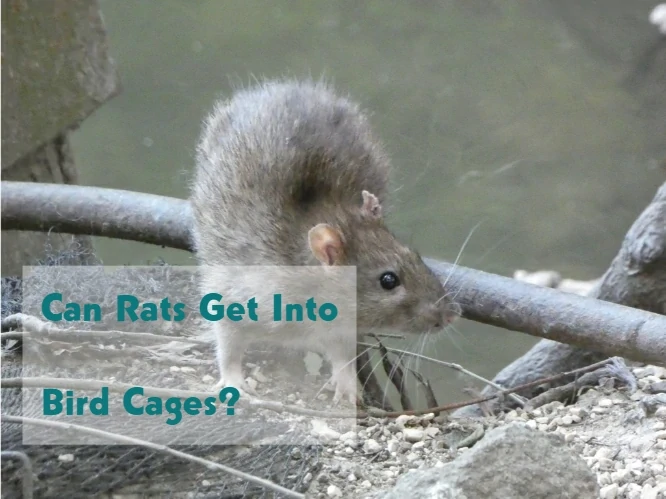
If you keep pet birds, you know how important it is to keep them safe from predators. Rats are one predator that many bird owners worry about, especially if they’ve seen signs of rodents in their home or yard. So, can rats get into bird cages?
Yes, rats can get into many bird cages, especially if the cage has bar spacing wider than 1/2 inch or if there are gaps around doors and feeders. Rats are attracted to bird seed and can squeeze through surprisingly small openings to reach food and potentially harm birds.
Rats see bird cages as an easy food source. Not only can they access spilled seed, but they might also harm or kill your birds if they manage to get inside the cage while you’re asleep.
Why Rats Are Attracted to Bird Cages
Rats don’t randomly show up around bird cages. They’re drawn there for specific reasons, and understanding these can help you protect your birds.
- Bird seed is the main attraction.
Whether it’s millet, sunflower seeds, or mixed seed blends, rats find all of it delicious. These seeds are high in fat and protein, which is exactly what rats need.
Rats can smell bird seed from pretty far away. Their sense of smell is incredibly sharp, and they’ll investigate any scent that suggests food is nearby.
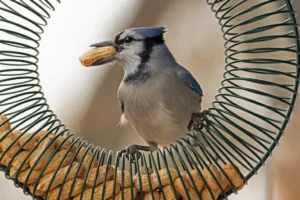
The constant availability of food makes bird cages especially attractive. Unlike wild food sources that might be seasonal or hard to find, your bird’s food dish is always full.
Spilled seed on the floor around the cage is like a welcome mat for rats. Birds are messy eaters and scatter seed everywhere, creating an easy meal for any rat passing by.
- Water is another draw.
If your bird cage has a water bottle or dish, rats will come for that too. Rats need to drink regularly, and a reliable water source is valuable to them.
- The bird itself can be a target.
Rats are opportunistic predators. If they can reach your bird, they might attack it, especially at night when the bird is sleeping and vulnerable.
Baby birds or eggs are particularly at risk. If you breed birds, rats will definitely try to access nests with eggs or chicks. These are easy protein sources.
- The warmth around bird cages can attract rats during cold weather.
If your cage is in a warm room or if the bird’s body heat warms the area, rats might be drawn to that comfort.
How Do Rats Get Into Bird Cages?
Rats have several methods for accessing bird cages, and they’re more capable than many people realize.
Bar spacing is the most common issue.
If the bars on your bird cage are spaced more than 1/2 inch apart, a rat can squeeze through. Adult rats can fit through openings as small as 1/2 inch.
They can compress their bodies because their ribs are flexible and they have no collarbone. If a rat’s skull fits through an opening, the rest of its body will follow.
Many bird cages designed for larger birds like parrots have wider bar spacing (often 3/4 inch to 1 inch), which is more than enough room for a rat to squeeze through.
Cage doors are another weak point.
If the door doesn’t latch securely or if there’s a gap around the door frame, rats can push or pry their way in.
Some cage doors are held closed by simple hooks or lightweight clips. Rats are surprisingly strong and can push these open, especially if they learn there’s food inside.
Rats are also excellent climbers.
If your bird cage sits on a stand or hangs from the ceiling, don’t think that makes it safe. Rats can climb vertical surfaces really well.
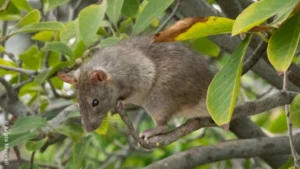
They’ll climb the stand, the cage itself, or even shimmy up a chain or wire if the cage is hanging. Height isn’t much of a barrier to rats.
Feeders and food dishes create access points too.
Many bird cages have external feeders that attach to the cage bars. If there are gaps around these attachments, rats can enlarge them.
Rats will gnaw on plastic or soft metal to make gaps bigger. Their teeth are incredibly strong and grow constantly, so they’re always looking for things to chew.
Bottom grates and cage floors can be problematic.
Some bird cages have removable bottom grates for cleaning. If these don’t fit snugly, rats can push them aside or squeeze through gaps.
Signs That Rats Are Targeting Your Bird Cage
If you’re worried that rats might be getting to your bird cage, there are clear signs to look for.
1. Rat droppings around the cage are the most obvious clue.
Rat poop is dark brown or black, shaped like small pellets, and about 1/2 to 3/4 inch long.
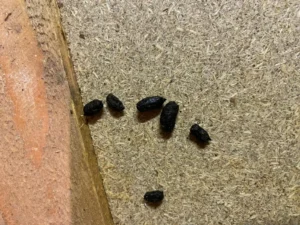
You might find these on the floor near the cage, on surfaces around the cage, or even inside the cage if rats have been getting in.
2. Missing or disturbed food is another sign.
If your bird’s food dish is being emptied faster than usual, or if food is scattered in strange patterns, rats might be the cause.
Rats will often pull food out of dishes and carry it away to eat elsewhere. You might find stashes of seeds hidden in corners or behind furniture.
3. Gnaw marks on the cage itself tell you rats have been there.
Look for fresh scratches or bite marks on plastic parts, wooden perches, or even the cage bars if they’re made of soft metal.
Fresh gnaw marks will be lighter in color because they expose new material underneath. Old marks look darker and weathered.
4. Your bird might be stressed or acting differently.
Birds can sense when predators are nearby. If your bird is unusually nervous, won’t sleep at night, or keeps alarm calling, something is scaring it.
Birds have excellent hearing and can probably hear rats moving around even if you don’t.
5. You might hear scratching or rustling sounds at night near the bird cage.
Rats are nocturnal, so they’re most active when you’re asleep.
If you hear these sounds coming from the direction of the cage, investigate immediately.
6. Feathers outside the cage can be a bad sign.
If a rat has attacked your bird, you might find feathers on the floor near the cage, or see that your bird has injuries.
Rats can reach through cage bars to grab birds, especially if the bird sleeps pressed against the bars.
7. Damaged cage accessories are another clue.
If toys, perches, or food dishes show signs of gnawing or have been knocked around more than usual, rats might be trying to access the cage.
The Hidden Dangers Rats Pose to Your Bird
Beyond the immediate threat of a rat attack, there are other dangers when rats access bird cages.
- Disease transmission is a major concern.
Rats carry various pathogens including salmonella, leptospirosis, and hantavirus. These can spread to birds through contaminated food or water.

If a rat walks through its own droppings or urine and then walks through your bird’s food dish, it’s contaminating the food with bacteria.
- Your bird can get sick from eating contaminated seed.
Symptoms might include lethargy, diarrhea, loss of appetite, or respiratory problems.
- Parasites are another issue.
Rats carry fleas, mites, and ticks. These parasites can jump from the rat to your bird, causing infestations.
Bird mites can make your bird extremely uncomfortable and can even cause anemia if the infestation is severe.
- Contaminated water is dangerous too.
If a rat drinks from your bird’s water dish or defecates in it, the water becomes unsafe for your bird.

Birds don’t have strong immune systems against many bacterial infections. What might make a rat carrier with no symptoms can make a bird seriously ill.
- Stress-related health problems can develop even if the rat doesn’t physically harm the bird.
Chronic stress weakens birds and makes them more likely to get sick.
Some birds might stop eating or drinking if they’re too scared. This can lead to serious health issues really quickly because birds have fast metabolisms.
- Injuries from panic are common.
If a bird sees a rat in its cage, it will try to fly away. In an enclosed cage, this often means flying into bars, perches, or toys.
These panic flights can cause broken wings, broken tail feathers, or head injuries. Birds can even break their necks flying into cage bars if they panic badly enough.
Which Cage Designs Are Most Vulnerable to Intruders?
Not all bird cages are equally vulnerable to rats. The design and construction make a big difference.
Wire cages with wide bar spacing are the most vulnerable. If you have a cage designed for large parrots with bars spaced 3/4 inch or more apart, rats can easily get through.

These cages are built for birds that need room to move, but the wide spacing that prevents the bird from getting stuck also lets rats in.
Small bird cages with narrow spacing (1/4 to 1/2 inch) are more secure, but still not rat-proof. A determined rat can fit through 1/2 inch openings, and some small rats can squeeze through even smaller gaps.
Cages with horizontal bars are easier for rats to climb. Rats use the bars like a ladder, making it simple to reach the top of even a tall cage.
Vertical bars are slightly better because they’re harder to climb, but rats can still manage it.
Cages with multiple access doors are more vulnerable. Each door is a potential entry point, and if any one of them doesn’t close securely, rats can exploit it.
Large cage doors designed for easy cleaning can be pushed open if the latch isn’t strong enough.

Acrylic or glass enclosures are much more rat-resistant. Some bird owners use acrylic cages or glass terrariums with wire tops. Rats can’t chew through thick acrylic or glass.
However, you still need to make sure the top fits securely and that there are no gaps where the acrylic meets the wire.
Homemade cages can be especially vulnerable if they’re not built properly. DIY cages might have irregular bar spacing, weak joints, or materials that rats can chew through easily.
Outdoor aviaries face even more risks. Large outdoor enclosures often have many potential entry points, and rats living in the yard have constant access to try to get in.
How to Rat-Proof Your Bird Cage
Protecting your bird cage from rats requires a combination of physical barriers and smart practices.
1. First, check your current bar spacing.
Measure the distance between bars carefully. If it’s more than 1/2 inch, your cage is vulnerable.
You can add hardware cloth over the existing bars. Hardware cloth is a wire mesh with very small openings (1/4 inch or less). Attach it to the outside of the cage using zip ties or wire.
Make sure the hardware cloth covers all sides, including the top and bottom. Don’t leave any gaps where rats might squeeze through.
2. Secure all doors with strong latches.
Replace simple hook closures with spring-loaded latches or carabiners that rats can’t open.
Some bird owners use small padlocks on cage doors for extra security, especially at night when rats are most active.
3. Check all seams and joints in the cage.
Look for any gaps where parts connect. Fill small gaps with aquarium-safe silicone or cover them with additional hardware cloth.
Pay special attention to where doors meet the cage frame. These spots often have small gaps that rats can exploit.
4. Elevate the cage if possible, but don’t rely on height alone.
Put the cage on a sturdy stand that’s at least 3 feet off the ground. This makes it slightly harder for rats to access, but remember that they can still climb.
You can make stands more difficult to climb by wrapping smooth metal bands around the legs. Rats can’t grip smooth metal as easily as wood or rough surfaces.
5. Use a solid bottom tray that fits snugly.
Make sure there are no gaps between the tray and the cage walls. Some cages have wire grate floors that sit above the tray, create gaps rats can use.

Remove the wire grate if it creates access points, or make sure it fits so tightly that there’s no room for a rat to squeeze through.
6. External feeders should be eliminated if rats are a problem.
Bring all food dishes inside the cage where you can control access better.
If you must use external feeders, make sure they attach very securely with no gaps around the mounting point.
Use These Food Management Tips to Keep Rats Away
How you handle your bird’s food makes a huge difference in whether rats are attracted to the cage.
- Clean up spilled seed daily.
Sweep or vacuum around the cage every single day to remove any seeds that have fallen to the floor.
Even a few seeds are enough to attract rats. Make this part of your daily bird care routine.
- Use a seed skirt or cage apron.
These are fabric or plastic barriers that attach around the bottom of the cage to catch falling seed before it hits the floor.
Empty the seed skirt daily into the trash. Don’t let seed accumulate there because rats can still access it.
- Store bird food in rat-proof containers.
Don’t keep seed in the original bag. Transfer it to metal or thick plastic containers with tight-fitting lids.
Rats can chew through paper bags, thin plastic, and even some plastic containers. A metal trash can with a locking lid works great for large quantities of seed.
- Don’t overfill food dishes.
Only put out as much food as your bird will eat in one day. This reduces waste and minimizes the amount of food available if a rat does get in.
- Remove fresh foods at night.
If you give your bird fruits, vegetables, or other fresh treats, take these out of the cage at night when rats are most active.
Fresh foods are especially attractive to rats, and they smell stronger than dry seeds.
- Consider feeding your bird at set times rather than leaving food available all day.
This is called scheduled feeding. You offer food in the morning and evening, then remove it after an hour.
This reduces the window of time when food is available to attract rats. However, this only works for some bird species and feeding situations.
- Never leave food on the floor overnight.
If your bird throws food out of the dish onto the cage floor, clean it up before you go to bed.
A rat will definitely come for food left sitting out overnight.
What Should You Do if a Rat Actually Gets Inside?
If you discover that a rat has gotten into your bird cage, you need to act immediately.
1. First, check on your bird.
Look for any signs of injury like missing feathers, bite marks, or blood. If your bird is injured, contact an avian vet right away.
Even small bites from rats can cause serious infections in birds. Don’t wait to see if it gets better on its own.
2. Remove your bird to a safe, temporary cage if you have one.
The cage that was breached isn’t safe until you’ve fixed whatever let the rat in.
Use a secure travel cage or a small emergency cage while you address the problem.
3. Thoroughly inspect the compromised cage.
Look carefully for how the rat got in. Check bar spacing, doors, bottom trays, and any accessories.

You need to find the entry point before you can fix it.
4. Clean the entire cage completely.
Rats leave behind droppings, urine, saliva, and bacteria. Everything needs to be disinfected before it’s safe for your bird again.
Remove all accessories, dishes, perches, and toys.
Wash everything with hot, soapy water, then disinfect with a bird-safe disinfectant or a bleach solution (1 part bleach to 10 parts water).
Let everything air dry completely before putting it back.
5. Replace any food or water that was in the cage.
Assume it’s contaminated and throw it away. Don’t take chances with your bird’s health.
Fix the entry point immediately.
Whether that means adding hardware cloth, replacing a door latch, or filling gaps, make the cage secure before putting your bird back in.
6. Set traps to catch the rat.
If a rat has found your bird cage once, it will definitely try again. You need to trap and remove it.

Place traps along walls near the cage, baited with peanut butter. Check them multiple times daily.
7. Monitor your bird closely for several days.
Watch for signs of illness like lethargy, loss of appetite, unusual droppings, or respiratory problems.
Stress and possible exposure to diseases mean your bird is vulnerable right now. Catch any health issues early.
Conclusion
Rats can definitely get into bird cages if the cage isn’t properly secured. They’re drawn by the constant supply of food and will try various methods to access it.
The key to protecting your bird is making the cage physically rat-proof with narrow bar spacing, secure latches, and no gaps, while also keeping the area clean and managing food carefully.
If rats are a problem in your area, don’t wait until one gets to your bird. Take preventive action now by inspecting your cage, making necessary improvements, and keeping the surrounding area rat-free.
Your bird depends on you for protection, and keeping rats out is one of the most important things you can do to ensure their safety.

Hi, my name is Ezra Mushala, i have been interested animals all my life. I am the main author and editor here at snakeinformer.com.