
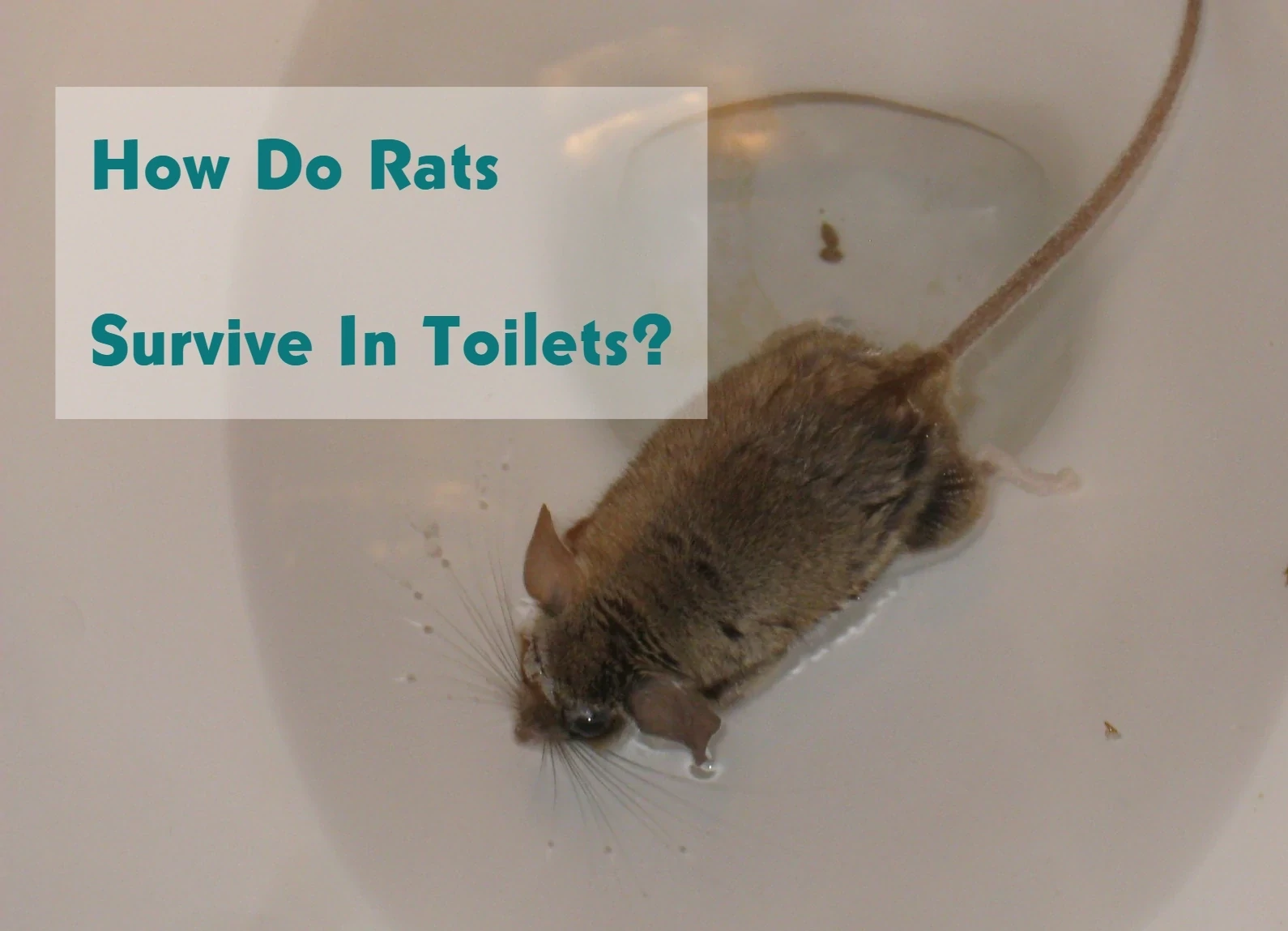
When you think about a rat swimming up through sewer pipes and emerging in a toilet, it seems almost impossible.
The journey involves swimming through water, navigating tight spaces, and holding their breath for extended periods. Yet rats actually do this, and they survive the experience. How do rats survive in toilets?
Rats survive in toilets by using their incredible swimming abilities, breath-holding capacity of up to three minutes, flexible bodies that squeeze through tight pipes, waterproof fur, and natural instincts that guide them through dark sewer systems. They’re basically built for navigating the exact environment that toilet pipes provide.
Understanding how rats pull off this feat reveals just how well-adapted these animals are to living in and around human infrastructure.
Their survival in toilets isn’t luck or accident, it’s the result of specific physical traits and behaviors that evolution has given them.
Their Swimming Skills Are Amazing
Rats are way better swimmers than most people realize, and this ability is key to how they survive the journey through toilet pipes.
A rat can swim continuously for up to three days without stopping. They tread water effortlessly and can cover distances of half a mile or more while swimming.

Their legs and feet work like little paddles, moving in coordinated strokes that propel them through water efficiently. They can change direction quickly even in narrow pipes.
Rats naturally know how to swim. They don’t need to learn it, baby rats can swim almost as soon as they’re mobile. This instinct means they don’t panic in water like many other animals would.
When swimming through pipes, rats use their whiskers to sense the walls around them and navigate in complete darkness. They can feel currents in the water and follow them to find pathways and air pockets.
Their bodies are streamlined in a way that reduces drag when swimming. They tuck their legs close and use their tail as a rudder to steer through tight spaces.
They Can Hold Their Breath Longer Than You’d Think
One of the biggest challenges of getting through a toilet is the U-bend, that curved section of pipe that’s completely filled with water. Rats handle this by holding their breath.
A healthy rat can hold its breath for about three minutes. This is more than enough time to push through even the longest residential toilet pipes.

They have large lungs relative to their body size, which lets them store more oxygen before diving underwater. This adaptation probably evolved because rats often have to escape through water or hide underwater from predators.
Before pushing through the water-filled sections, rats take several deep breaths to maximize the oxygen in their blood. They instinctively prepare for the underwater portion of the journey.
If they start running out of air, rats can actually slow their heart rate and metabolism slightly to extend how long they can survive without breathing. This is a stress response that gives them extra time to reach air.
Their Flexible Bodies Squeeze Through Impossible Spaces
Rats have skeletal structures that let them compress their bodies and fit through openings that look way too small for them.
A rat can squeeze through any opening that its head can fit through. Since their skull is the least flexible part of their body, if the head fits, the rest will follow.
Adult rats can compress their bodies enough to pass through holes as small as half an inch in diameter. This is roughly the size of a quarter.
Their ribs are hinged in a way that lets them fold somewhat. The rat can flatten its chest cavity temporarily to slip through narrow spots.
Rats don’t have rigid colarbones like humans do. This means their shoulder area is flexible and can collapse to fit through tight squeezes.
Even in the curved, narrow sections of toilet pipes, rats can contort their bodies to maintain forward progress. They twist and bend in ways that look painful but actually come naturally to them.
Their Fur Stays Mostly Dry
Despite swimming through water and sewage, rat fur has properties that help keep them from getting completely waterlogged.
Rat fur has a natural oily coating produced by glands in their skin. This oil makes the fur water-resistant, kind of like how a duck’s feathers shed water.
The individual hairs on a rat have a texture that doesn’t absorb water easily. Water tends to bead up and roll off rather than soaking in.

When a rat comes out of water, it can shake itself dry pretty quickly, much like a dog does. This vigorous shaking removes most of the water from their coat.
Their fur also traps a thin layer of air next to their skin when they swim. This air layer provides some insulation and helps them stay warm even in cold sewer water.
Still, rats don’t like being wet for extended periods. Once they reach a dry space (like your toilet bowl or bathroom floor), they’ll spend time grooming to restore their coat completely.
They Navigate in Complete Darkness
Sewer pipes and the inside of toilet plumbing are pitch black, yet rats move through these spaces confidently.
Rats rely very little on vision for navigation. Their eyes are adapted for low light but they don’t need light at all to find their way.
Their whiskers are incredibly sensitive touch organs. These stiff hairs can detect air currents, vibrations, and nearby surfaces even without making direct contact.
As they move through pipes, rats constantly sweep their whiskers back and forth, building a mental map of the space around them. They can sense when a pipe narrows, turns, or opens up.
Their sense of smell guides them too. Rats follow scent trails left by other rats and can smell fresh air coming from drains and vents, which helps them find routes that lead to the surface.
They also have excellent hearing that picks up on echoes and sounds of water movement. This gives them another layer of sensory information about the environment.
Rats have special balance organs in their inner ears that tell them which direction is up even when they’re underwater in complete darkness. This prevents them from getting disoriented.
They Tolerate Disgusting Conditions
Toilet pipes and sewers are full of waste, bacteria, and chemicals that would sicken many animals. Rats handle these conditions remarkably well.
Rats have extremely strong immune systems. They carry many diseases but are rarely made sick by them themselves. Their bodies fight off bacterial and viral infections that would overwhelm other animals.
Their digestive systems can process a wide variety of foods, including partially decomposed organic matter they might encounter in sewers. They have stomach acid strong enough to kill many harmful bacteria.
Rats are constantly grooming themselves, which helps remove contaminants from their fur and prevents skin infections. Even after swimming through sewage, they’ll clean themselves thoroughly.
They’ve evolved alongside human sewage systems for hundreds of years. The rats that couldn’t tolerate these conditions died out, while those that could survive passed those traits to their offspring.
Rats also seem to have a tolerance for chemical irritants that would bother other animals. The cleaning chemicals and waste products in sewers don’t deter them much.
They Know When to Push Forward and When to Turn Back
Not every rat that enters a toilet pipe system makes it all the way through. Survival depends partly on knowing limits.
Rats seem to assess difficulty as they go. If a pipe becomes too narrow or the water section goes on too long, they’ll often turn back rather than continuing forward.
Younger, smaller rats are more likely to successfully navigate toilet pipes than larger adults simply because they fit through tight spaces more easily.
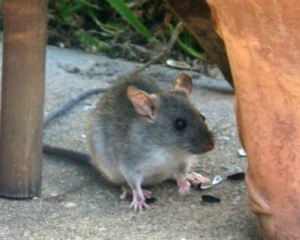
Rats that are already familiar with pipe systems (because they’ve been living in sewers) have better survival rates than rats encountering pipes for the first time.
If a rat starts running low on air while underwater, it can actually back up through pipes rather than continuing forward. They don’t panic and thrash, they methodically retreat to where they last found air.
Female rats tend to be slightly smaller than males and may have higher success rates getting through the tightest parts of toilet plumbing.
Their Claws and Teeth Help Them Climb
While much of the journey through toilet pipes involves swimming, some sections require climbing, especially the final push up into the toilet bowl.
Rat claws are sharp and curved, perfect for gripping smooth surfaces. They can climb up the inside of pipes that seem too slick for any animal to scale.
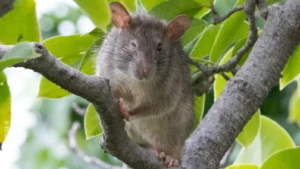
In vertical pipe sections, rats use a technique where they brace themselves against opposite sides of the pipe, pressing outward with their legs while moving upward. This works even in smooth plastic pipes.
Their toes can spread wide, increasing the surface area in contact with the pipe wall and improving grip.
If they encounter a particularly slippery section, rats use their teeth to grab onto any small imperfection or ridge in the pipe surface, pulling themselves forward.
The final push up through the water in the toilet bowl is challenging, but rats push off the bottom of the bowl with powerful hind legs and burst through the surface.
They Have Motivation to Keep Going
Surviving the journey through toilet pipes requires sustained effort, and rats have strong motivations that keep them moving forward.
Rats exploring pipe systems are usually looking for food, and they can smell the odors from homes above. These food smells draw them upward through the plumbing.
When sewer conditions get bad (flooding, overcrowding, lack of food), rats become more desperate and willing to take risks like attempting the difficult journey through toilet pipes.
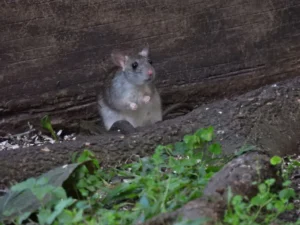
Younger rats exploring for the first time or looking to establish their own territory are more likely to push through difficult pipe sections.
Rats being chased by predators (like other rats or the occasional feral cat in sewers) may enter pipes in a panic and then just keep going forward because turning back means facing whatever scared them.
Simple curiosity drives some of this behavior too. Rats are intelligent and exploratory by nature, and they investigate new pathways just to see where they lead.
They Recover Quickly Once They Reach Air
When a rat finally pushes up through the water in your toilet bowl, it’s exhausted but recovers fast.
The first thing a rat does after surfacing is take several deep, gasping breaths to replenish its oxygen. Their respiratory system bounces back quickly from the strain.
They’ll usually sit still for a moment, catching their breath and assessing this new environment they’ve emerged into.

Most rats immediately start grooming, licking their fur and whiskers to clean off sewage and restore their coat. This grooming also calms them after the stressful journey.
Their heart rate, which was elevated during the swim, returns to normal within a few minutes. Rats have cardiovascular systems that handle intense physical stress well.
If the rat decides to leave your toilet (maybe scared by noise or light), it has enough energy to climb out of the bowl and run away, even right after the exhausting pipe journey.
Why Don’t They Don’t Get Stuck More Often?
Given how difficult the journey is, you might wonder why rats don’t get stuck and die in toilet pipes more often than they apparently do.
Rats do get stuck sometimes, but it doesn’t happen as much as you’d think because they’re good at judging what they can handle.
When a pipe becomes too narrow, rats usually recognize they can’t proceed and turn back before getting wedged in permanently.

Their flexible bodies mean even tight spots that slow them down don’t necessarily trap them. They can back out of situations that would trap less flexible animals.
Dead rats in pipes do happen occasionally, and plumbers sometimes find them during repairs. But considering how many rats are in sewer systems, the percentage that get stuck is actually pretty small.
Rats also seem to avoid pipes that have strong water flow. They prefer exploring drains that are relatively calm, which reduces the risk of being swept into a situation they can’t escape.
Rats Learn from Experience
Individual rats that have successfully navigated through toilet pipes before get better at it with practice.
Rats have excellent spatial memory. Once they’ve traveled through a particular route, they remember it and can navigate it more quickly and confidently the next time.
They leave scent trails as they move, which they can follow to retrace successful routes. Other rats can follow these trails too, which is why once one rat finds a way into a building, others often follow.
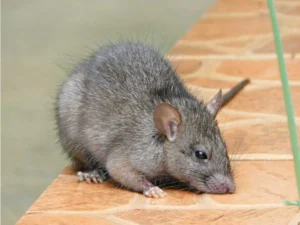
Rats communicate with each other through various sounds and scents. A rat that has found a good route (one that leads to food or shelter) might attract other rats to try the same path.
Young rats learn by following adults. If a young rat follows an experienced rat through toilet pipes, it learns the route and the techniques needed to survive the journey.
Conclusion
Rats survive in toilets because they’re incredibly well-adapted to exactly this type of challenge.
Their swimming ability, breath-holding capacity, flexible bodies, water-resistant fur, and sensory adaptations all combine to make them perfectly suited for navigating through plumbing systems.
Understanding these survival mechanisms explains why preventing rats from entering your plumbing is so important. You can’t rely on the journey being too difficult for them because nature has equipped rats with everything they need to make it through.
Physical barriers like rat blockers and maintaining your pipes to eliminate entry points are the only reliable ways to keep these remarkably capable animals out of your toilet.

Hi, my name is Ezra Mushala, i have been interested animals all my life. I am the main author and editor here at snakeinformer.com.