
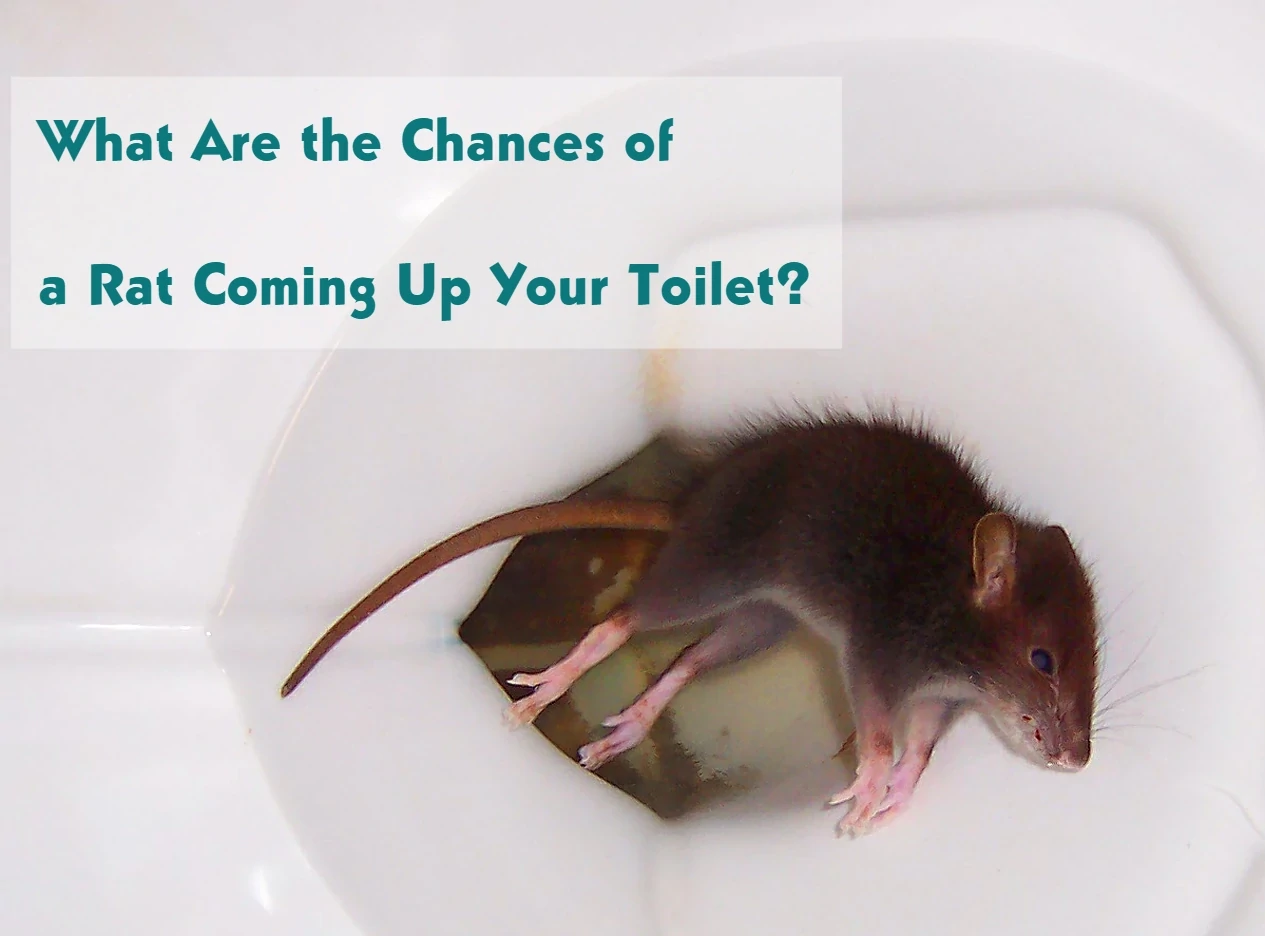
If you’ve ever heard stories about rats appearing in toilets, you might be wondering if this is something you actually need to worry about.
The idea of a rat climbing up through your plumbing and popping up in your bathroom sounds like something out of a horror movie, but it does happen. So what are the chances of a rat coming up your toilet?
The chances of a rat coming up your toilet are pretty low in most modern homes, but it’s not impossible. Rats can swim through sewer pipes and climb up into toilets, especially in older buildings with damaged pipes or in areas with serious rat problems.
While it’s not super common, it happens often enough that you should know what makes it possible and how to protect yourself.
Rats are really good swimmers and can hold their breath for up to three minutes, which gives them plenty of time to navigate through your plumbing.
How Do Rats Actually Get Into Toilets?
Rats don’t just randomly decide to take a swim up into your bathroom. They usually end up in toilets when they’re already living in the sewer system and find their way through the pipes.

These animals are amazing swimmers. A rat can tread water for three days straight and swim for half a mile without stopping. When they’re in the sewer pipes under your home, they can actually swim up through the curves and bends in your plumbing.
The hardest part for them is getting past the U-bend (that curved part of pipe under your toilet that holds water). But rats are flexible and determined. They can squeeze through spaces that seem way too small and push themselves up through that water-filled curve.
Once they make it past the U-bend, they just need to push up through the water in your toilet bowl. For a rat, this isn’t that difficult.
What Makes Your Home More at Risk
Some homes are way more likely to have this problem than others. If you live in an older building, your chances go up quite a bit.
Old pipes often have cracks, breaks, or loose connections. These damaged spots make it easier for rats to get into the plumbing system in the first place. Once they’re in there, they can follow the pipes right to your toilet.
Homes in cities with large rat populations are also at higher risk. If there are tons of rats in the sewers under your neighborhood, the chances of one finding its way into your specific toilet increase just because there are more rats trying.

Ground-floor and basement bathrooms are the easiest targets. Rats don’t have to climb as far, and these toilets are usually closer to where the sewer lines connect to your home.
If your home has any kind of sewer line damage or if tree roots have broken into your pipes, you’re basically giving rats an open invitation into your plumbing system.
The Real Numbers Behind Toilet Rats
It’s actually pretty hard to find exact statistics on how often this happens because most people don’t report it. But pest control experts say they get calls about rats in toilets more often than you’d think.
In cities like New York, London, and Paris (places known for having lots of rats), pest control companies deal with toilet rats several times a month. That might not sound like much when you think about millions of homes, but it’s still more common than most people realize.

One pest control study found that in buildings with known rat problems, about 2 to 5 percent of residents reported seeing a rat in their toilet at some point. That’s not a huge percentage, but it’s not nothing either.
The chances are much lower in newer buildings and in areas without major rat problems. In suburban areas with good sewer systems and not many rats around, you might never hear about this happening.
Signs That Rats Might Be in Your Pipes
You might have rats in your plumbing system even if they haven’t made it into your toilet yet. There are some warning signs you can watch for.
If you hear scratching or squeaking sounds coming from your walls or pipes, especially at night, that could be rats moving around in there. Rats are most active when it’s dark, so nighttime noises are a big red flag.

Strange gurgling sounds from your toilet when nobody’s using it might mean something is moving around in your pipes. This happens because rats displace water as they swim through.
If your toilet water level seems to change on its own, dropping lower than normal or rippling when nobody touched it, a rat might be moving around down in the pipes.
You might also notice a strong, musky smell coming from your bathroom drains. Rats have a pretty distinct odor, and if they’re in your pipes, you’ll probably smell it.
Why This Happens More in Some Cities Than Others
Certain cities deal with toilet rats way more than others, and it mostly comes down to how old the infrastructure is and how many rats live there.
Cities with really old sewer systems (like New York, which has pipes from the 1800s) have way more cracks and entry points for rats.
These aging systems are basically like highways for rats to travel through.
Places with dense populations tend to have more rats because there’s more food waste and more places for them to hide.
More rats in the sewers means more chances of them ending up in toilets.

Cities that are close to water (coastal cities or ones near rivers) often have higher rat populations too. Rats are drawn to water sources, and they thrive in moist environments like sewers.
Weather can also play a role. During heavy flooding or after big storms, rats get pushed out of their normal hiding spots in the sewers and might end up in unusual places, including toilets.
What Attracts Rats to Your Specific Toilet?
If a rat does make it into your plumbing system, certain things might draw it specifically to your toilet rather than someone else’s.
Rats follow smells, especially food smells. If you’ve been flushing food scraps down your toilet (which you really shouldn’t do), those smells can travel through the pipes and basically act like a trail leading rats right to your bathroom.

Leaky pipes that drip into walls or under floors can attract rats because they need water. If your plumbing is leaking anywhere, rats in the area will find it.
Toilets that don’t get used very often are actually easier targets. When a toilet sits unused, the water in the bowl can evaporate a bit, and the water in the U-bend might get lower.
This makes it easier for rats to push through.
Connecting to an old or poorly maintained sewer line is probably the biggest factor. If the main sewer line serving your building has problems, every toilet connected to it is potentially at risk.
The Time of Year Matters
You’re more likely to see rats coming up toilets during certain times of the year, and understanding this can help you stay alert.
Fall and winter are peak times for rats trying to get indoors. When the weather gets cold, rats look for warm places, and your home’s plumbing provides a heated pathway right into your house.
Spring can also be busy because that’s when rat populations boom. More baby rats mean more rats overall, and young rats are often the ones that end up in weird places as they explore.

Summer doesn’t see as many toilet rats in most places, but in really hot climates, rats might seek out the cooler, wetter environment of sewer pipes and plumbing.
Heavy rain at any time of year can flood sewer systems and push rats into pipes they wouldn’t normally explore, including the ones leading to your toilet.
How Building Age Affects Your Risk
The age of your building makes a huge difference in whether you’ll ever deal with a toilet rat.
Buildings constructed before 1970 generally have more vulnerable plumbing. The materials used back then (like clay pipes) break down over time and develop cracks that rats can exploit.
Newer buildings usually have PVC or other modern plastic pipes that are smoother inside and harder for rats to grip.
They’re also less likely to have damage that would let rats enter in the first place.

But even new buildings can have problems if they’re connected to old city sewer systems. Your personal pipes might be brand new, but if they connect to ancient city sewers full of rats, you’re still at some risk.
High-rise buildings actually have lower risks for upper floors because rats typically can’t climb more than a few stories through plumbing. Ground floor and basement units are way more vulnerable.
What Property Managers Need to Know
If you manage a property, especially an apartment building, you need to take toilet rats seriously because one rat can affect multiple units.
Regular pipe inspections can catch damage before it becomes a pathway for rats. Having a plumber scope your sewer lines every few years is worth the cost.

Installing backflow valves or rat guards in your main sewer line can physically block rats from entering your building’s plumbing system. These are basically one-way valves that let waste flow out but don’t let anything swim back up.
Tenant education matters too. If people in your building are flushing food or have other habits that attract rats, everyone in the building could end up dealing with the problem.
Keep good relationships with pest control professionals who know your building. If rats do show up, quick response makes a huge difference in preventing them from becoming a regular problem.
Myths vs. Reality About Toilet Rats
There’s a lot of misinformation out there about rats in toilets, so let’s clear up what’s actually true.
Myth: Rats can’t actually swim up through the U-bend.
Reality: They absolutely can. Rats are incredible swimmers and can hold their breath long enough to push through.
Myth: This only happens in really poor or dirty areas.
Reality: It can happen anywhere there are rats and old pipes, including nice neighborhoods.
Myth: Closing the toilet lid will keep rats from coming up.
Reality: A determined rat can push open most toilet lids from below. The lid isn’t really a barrier.
Myth: Rats in toilets will attack you.
Reality: Rats are actually pretty scared of humans. A rat that ends up in your toilet is usually just as freaked out as you are and wants to escape.
Myth: If you see one rat in your toilet, your house is infested.
Reality: Often a toilet rat is just passing through from the sewer. It doesn’t necessarily mean you have rats living in your walls.
The Bigger Picture of Urban Rat Populations
Understanding your chances of seeing a toilet rat really comes down to understanding rat populations in cities.
Most major cities are seeing rat populations grow, not shrink. New York City estimates it has about 2 million rats. Paris might have as many rats as people.
These numbers mean more interactions between rats and humans, including the toilet situation.

Rats breed incredibly fast. A female rat can have up to 12 babies every three weeks, and those babies can start breeding when they’re just a few months old.
This explosive reproduction means rat problems can get serious really quickly.
Cities are basically perfect rat habitats. There’s endless food in dumpsters and sewers, plenty of warm places to nest, and not many natural predators.
This is why urban rat populations keep growing despite control efforts.
Climate change might actually be making the problem worse. Milder winters mean more rats survive to breed in spring, and more extreme weather events push rats into places they wouldn’t normally go.
How Do Your Neighbors Affect Your Risk?
Your chances of getting a toilet rat aren’t just about your house. What’s happening in the homes around you matters too.
If your neighbors have rats and aren’t dealing with the problem, those rats can easily move through connected sewer lines and end up in your pipes. Rats don’t respect property lines when they’re underground.
Buildings that share sewer lines basically share rat risk. An apartment building, townhouse complex, or even just houses on the same street all connect to the same sewer pipes.
One neighbor who feeds outdoor cats or has unsecured garbage can attract rats to your entire block. Once rats are in the area, they explore all available spaces, including sewer systems.
This is why community-wide pest control efforts work better than individual ones. If everyone on your street takes steps to reduce rat populations and secure their pipes, everyone benefits.
Conclusion
The chances of a rat coming up your toilet are low in most situations, but it’s definitely possible and happens more often than many people think.
Your risk depends on a bunch of factors including where you live, how old your building is, the condition of your pipes, and how many rats are in your area.
If you live in an older building in a city with known rat problems, you should take this seriously and look into prevention methods. Even if the chances are small, the experience of finding a rat in your toilet is disturbing enough that it’s worth taking steps to prevent it.
The good news is that there are real ways to protect yourself, from installing rat guards in your sewer line to keeping your pipes in good condition.
Understanding what attracts rats and what makes your home vulnerable is the first step in making sure you never have to deal with this problem.

Hi, my name is Ezra Mushala, i have been interested animals all my life. I am the main author and editor here at snakeinformer.com.