
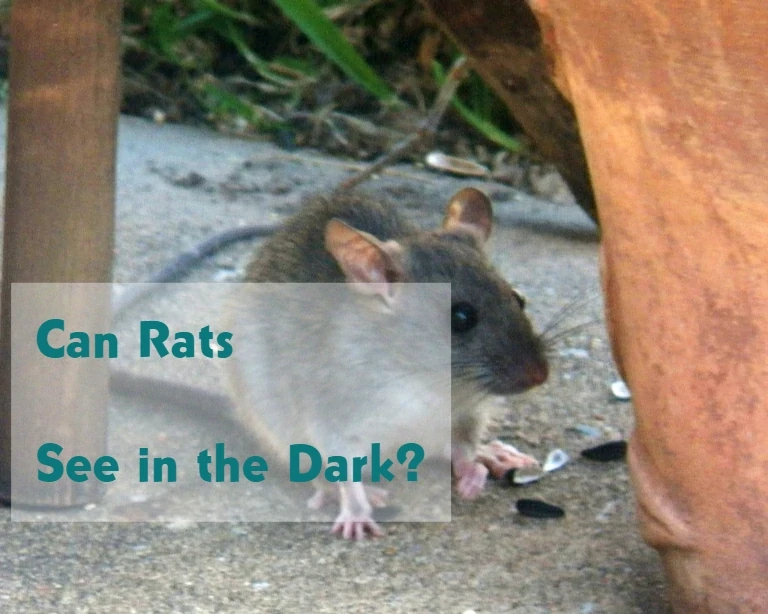
You hear scratching sounds in your attic at night, or you’ve spotted rats scurrying around in dim corners of your basement.
It’s pitch black in there, so you’re probably wondering how they’re getting around so easily. Can rats actually see in the dark?
Rats can see in very low light conditions much better than humans, but they can’t see in complete darkness. They have special adaptations that let them see with minimal light, and they also rely heavily on their whiskers, hearing, and sense of smell to move around when it’s truly dark.
While rats do have better night vision than people, they’re not moving around in total blackness using their eyes alone.
They’re actually using a combination of senses, with their incredible whiskers and hearing doing just as much work as their vision when light levels are extremely low.
How Rat Eyes Are Built for Low-Light Vision
Rat eyes are structured differently from human eyes, and these differences give them a big advantage in dim conditions.
Understanding how their eyes work helps explain what they can and can’t see.
Rats have much larger eyes relative to their body size compared to humans. These bigger eyes can gather more light, which is the first step to seeing better in darkness.

The key difference is in the types of light-detecting cells in their eyes. Human eyes have two types: rods and cones. Rods detect light and dark, while cones detect color.
Rats have way more rods than cones, which means they’re built to detect movement and shapes in low light rather than see colors clearly.
Rat eyes also have a special layer behind the retina called the tapetum lucidum. This is the same thing that makes cat or dog eyes glow when light hits them at night.

The tapetum acts like a mirror, reflecting light back through the retina a second time.
This reflection gives the light-detecting cells another chance to absorb photons they might have missed the first time.
It basically doubles the effectiveness of whatever dim light is available.
However, this setup comes with tradeoffs. While rats can see better in low light, their overall vision isn’t as sharp as human vision.
They’re more nearsighted, meaning they can’t see fine details or objects far away very clearly.
What Can Rats Actually See When It’s Dark?
When we talk about rats seeing in the dark, we need to be specific about what “dark” means. There’s a big difference between dim light and absolute darkness.
In what humans would consider a dark room, like a basement with no windows at night, there’s usually still some light.
Maybe it’s seeping under a door, coming from a digital clock, or filtering in from outside streetlights. This tiny amount of light is enough for rats to see pretty well.
Rats can detect light levels about 5 to 8 times dimmer than what humans need to see. So in conditions where you’re basically blind and stumbling around, rats are navigating with relative ease using their vision.
They’re particularly good at detecting motion in low light. If something moves in their peripheral vision, even in very dim conditions, they’ll spot it.
This is a survival adaptation that helps them avoid predators.
In true, complete darkness with absolutely zero light, rats can’t see anything. Their eyes need at least some photons to work with.
No animal can see in absolute darkness because seeing requires light, period.
But here’s the thing: true complete darkness is actually pretty rare in real-world situations.
Even in basements, attics, and wall voids where rats commonly live, there’s usually at least a tiny bit of light from somewhere.
Other Senses Rats Rely on When They Can’t See Well
While rats have decent night vision, they don’t rely on their eyes alone when moving around in dark spaces. They have other senses that are actually more important for nighttime navigation.
Their whiskers are incredibly sensitive touch receptors. Rats have long whiskers on their face, and they also have smaller whiskers on their wrists.
These whiskers can detect tiny air currents, vibrations, and physical obstacles.
As a rat moves through a dark space, it sweeps its whiskers back and forth constantly. The whiskers touch walls, objects, and openings, giving the rat a detailed “map” of its surroundings through touch.
They can move through familiar routes in total darkness using whiskers alone.
Rats have amazing hearing that’s way better than humans.
They can hear ultrasonic sounds (frequencies too high for human ears) and can pinpoint the direction and distance of sounds with incredible accuracy.
In darkness, rats use their hearing to detect danger, find food, and locate other rats.
They can hear insects moving, water dripping, and even the ultrasonic vocalizations that other rats make.
Their sense of smell is also extremely well developed. Rats leave scent trails as they move around, marking their regular paths with urine and scent gland secretions. They can follow these scent trails in complete darkness, basically using smell as a navigation system.

Touch is another important sense. Rats like to keep their body in contact with vertical surfaces as they move, a behavior called thigmotaxis.
You’ll notice rats running along walls rather than crossing open spaces. This habit lets them use touch to guide their movement even when they can’t see well.
Why Rats Are Naturally More Active at Night
Since rats don’t see much better in complete darkness than we do, you might wonder why they’re so active at night. It’s not really about their vision at all.
Rats are naturally nocturnal, which means they’re biologically programmed to be active during nighttime hours and sleep during the day.
This behavior developed over millions of years of evolution.
Being nocturnal is a survival strategy. Most of the animals that hunt rats (hawks, owls, cats, foxes) are either active during the day or hunt using methods that don’t require darkness.
By being active at night, rats avoid many predators.

Rats also avoid human activity by being nocturnal. Humans are mostly active during daylight hours. By coming out at night when people are asleep, rats reduce their chances of being spotted and killed.
The reduced competition for food at night is another factor. Many other small animals are active during the day, competing for the same food sources. By feeding at night, rats have less competition.
Temperature regulation plays a role too. In hot climates, nighttime activity helps rats avoid overheating.
They can forage for food during cooler nighttime temperatures and rest in their burrows during the hot day.
Their body clocks are simply set for nighttime activity. Even if you put a rat in constant darkness or constant light, it will still follow a roughly 24-hour cycle of being active for part of the time and resting for part of the time.
How Do Different Light Levels Change Rat Behavior?
The amount of light in an environment actually changes how rats behave. They’re not equally comfortable at all light levels.
Rats really don’t like bright light. If you shine a flashlight directly at a rat, it will usually run away immediately.
Bright light makes them feel exposed and vulnerable, triggering their escape instinct.
This fear of bright light is called photophobia. It’s an innate response that helps protect them from predators.
In the wild, open bright areas are dangerous because predatory birds can spot them easily.

In dim light or darkness, rats are much bolder. They’ll spend more time in the open, explore more actively, and show less fear. This is when they do most of their feeding, mating, and territorial activities.
If you have rats in your home and you turn on all the lights, you’ll notice they disappear. They haven’t left the building.
They’ve just retreated into wall voids, under appliances, or into other dark hiding spots where they feel safer.
This behavior is actually why trying to spot rats during the day is so hard. They’re not gone. They’re just hiding in dark spaces waiting for the safety of darkness to return.
Red light is interesting. Studies show that rats are much less bothered by red light than white or blue light.
Some pest control professionals use red lights when inspecting areas for rats because the rats don’t react as strongly to it.
How Rat Vision Compares to Other Common Pests
Different pests have different levels of night vision, and understanding this helps you know what you’re dealing with.
Mice have vision very similar to rats. They also have lots of rod cells, a tapetum lucidum, and good low-light vision. Mice and rats are closely related, so their eyes work in much the same way.

Cockroaches have compound eyes that work completely differently from mammal eyes. They can see in extremely low light conditions, even dimmer than rats can handle. Cockroaches are actually better at navigating in near-total darkness than rats are.
Raccoons have excellent night vision, probably better than rats. Raccoons have more rods in their eyes and a very well-developed tapetum. They’re also bigger animals with bigger eyes, which helps gather more light.

Opossums are also better at seeing in darkness than rats. They’re nocturnal marsupials with eye structures optimized for nighttime activity. They can see clearly in light levels where rats would be struggling.

Squirrels, which are related to rats, actually have worse night vision. Squirrels are active during the day, so their eyes are built differently. They have more cones for color vision and fewer rods for low-light vision.

Bats are the extreme case. Most bats barely use vision at all. They use echolocation (sound waves) to navigate and hunt in complete darkness.
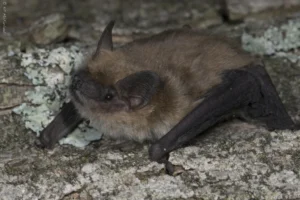
Their eyes are often quite small because they just don’t rely on vision much.
Rats Cause the Most Damage While You’re Sleeping
The fact that rats are active at night when people are asleep makes them particularly destructive. They can do a lot of damage before anyone notices.
Chewing happens mostly at night. Rats gnaw on electrical wires, wooden structures, plastic pipes, and insulation while you’re sleeping. This chewing can create fire hazards from damaged wires, water leaks from damaged pipes, and structural problems from gnawed wood.
Food contamination occurs during nighttime raids. Rats will get into your pantry, climb into cabinets, and chew through packaging to get at food. They leave droppings, urine, and hair behind, contaminating way more food than they actually eat.
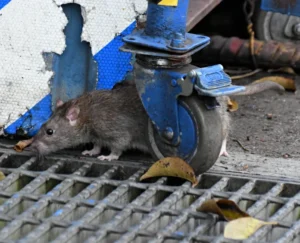
Noise at night is how many people first realize they have rats. The scratching, scurrying, and gnawing sounds in walls or ceilings are most noticeable at night when everything else is quiet.
Disease transmission is a concern. Rats carry various diseases and parasites. When they’re active at night, they’re leaving behind urine droplets, droppings, and contamination on surfaces that humans will touch the next day.
Population growth happens largely at night when rats are active and socializing. Rats breed very quickly, and much of their mating activity occurs during nighttime hours when they feel safe.
The cover of darkness also means rats can explore your entire house without you seeing them. During the day, you might spot a rat and know where it went. At night, they move freely through your space completely undetected.
Can Light Really Help Discourage Rats?
Since rats prefer darkness, you can use light as part of your rat control strategy. It won’t solve a rat problem by itself, but it helps.
Keep outdoor areas well lit at night. Motion-activated lights around garbage cans, compost bins, and other food sources make rats less comfortable approaching these areas.

Inside, leaving lights on in areas where you’ve seen rat activity can discourage them from coming out. They’ll still be in your walls or attic, but they might avoid coming into lit living spaces.
However, don’t expect lights to drive rats away completely. If they’re hungry enough or if their population is large enough, they’ll venture into lit areas anyway. Light is a deterrent, not a solution.
Strobe lights or randomly flashing lights might be more effective than constant lighting. The unpredictable nature of flashing lights seems to bother rats more than steady illumination.
Ultraviolet lights can help you find rat evidence. Rat urine glows under UV light, so using a blacklight lets you see urine trails, spots, and contaminated areas that are invisible in normal light.
When doing repairs or exclusion work, bright work lights in attics, basements, and crawl spaces will keep rats back in hiding while you work.
They won’t leave the building, but they’ll stay out of your way in dark corners while you seal up their entry points.
Using Night Vision Technology to Detect Rat Activity
If you’re trying to monitor rat activity in dark areas, modern technology can help. You don’t need to rely on just your eyes and a flashlight.
Trail cameras with night vision or infrared capabilities are excellent for monitoring rats. These cameras can record video in complete darkness using infrared light that’s invisible to rats. You can set them up in attics, basements, or outdoor areas to document rat activity.
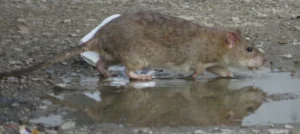
Thermal imaging cameras detect heat signatures. Rats are warm-blooded, so they show up clearly on thermal cameras even in total darkness. These cameras are expensive but are sometimes used by professional pest control companies.
Night vision goggles or monoculars amplify available light, letting you see in very dim conditions.
These can be useful for watching outdoor rat activity at night without alerting the rats to your presence.
Infrared beam counters can track how many times rats pass through an opening.
These devices create an invisible beam, and each time a rat breaks the beam, it’s counted. This helps you understand how active a particular entry point is.
Regular security cameras with night vision are also helpful. Many modern home security cameras have infrared LEDs that light up the scene for the camera while remaining invisible to rats.
The advantage of all these tools is they let you monitor rats during their most active hours without disturbing them. You get accurate information about their behavior, travel routes, and population size.
Conclusion
Rats can see in very low light conditions much better than humans can, thanks to eye structures adapted for dim environments. They have more rod cells, larger eyes, and a reflective layer that boosts their ability to see with minimal light.
However, rats can’t see in complete darkness any better than we can. In truly dark environments, they rely heavily on their other senses, especially their whiskers, hearing, and sense of smell, to move around safely.
Rats are active at night not because they can see better in darkness, but because being nocturnal helps them avoid predators and human activity.
They’re naturally programmed to be active when it’s dark, and they’re much bolder and more comfortable in dim conditions than in bright light.
If you’re dealing with rats, understanding their vision and nighttime behavior helps you monitor them more effectively and use strategies like lighting to make areas less appealing.
But remember that light alone won’t solve a rat problem. You’ll still need proper exclusion, trapping, and sanitation to get rid of them completely.

Hi, my name is Ezra Mushala, i have been interested animals all my life. I am the main author and editor here at snakeinformer.com.