
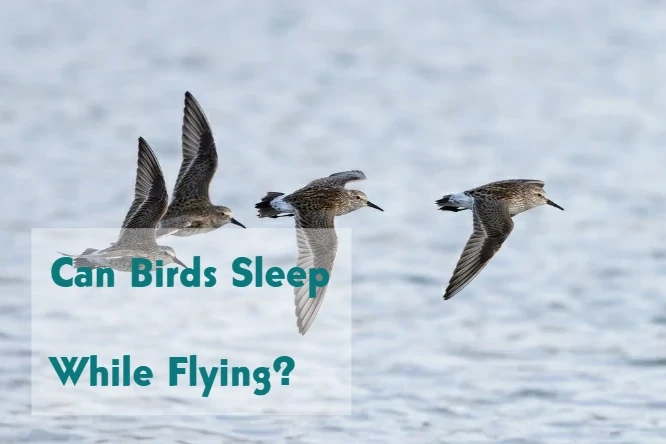
Birds do some pretty amazing things. They migrate thousands of miles, navigate by the stars, and some can even fly backwards. But one of the most mind-blowing abilities some birds have is the ability to catch some sleep while they’re actually in the air.
If you’ve ever wondered how birds stay awake during those incredibly long migration flights, you might be asking: can birds sleep while flying?
Yes, some birds can sleep while flying, but not all birds have this ability. Birds that sleep while flying use a technique called unihemispheric slow-wave sleep, where one half of their brain sleeps while the other half stays awake to control flight. This mainly happens in birds that make long ocean crossings or continuous multi-day flights.
This ability sounds like something out of science fiction, but it’s very real.
Let’s look at how birds pull off this incredible feat and which birds actually do it.
How Birds Manage to Sleep Without Falling Out of the Sky
The key to sleeping while flying is something called unihemispheric slow-wave sleep. That’s a mouthful, so let’s break it down into simple terms.
Basically, birds can shut down one half of their brain to sleep while keeping the other half awake.
The awake half handles the essential tasks like maintaining flight, watching for obstacles, and keeping track of direction.
When we humans sleep, both sides of our brain sleep at the same time. We basically go offline completely.
Birds that sleep while flying can’t do this because they’d fall out of the sky.
Instead, they let the left side of their brain sleep while the right side stays awake.
After a while, they switch, and the right side sleeps while the left side takes over. This way, the bird gets rest, but never completely loses consciousness.
During this half-brain sleep, the bird also keeps one eye open (the eye connected to the awake half of the brain).
So a bird sleeping with its left brain would keep its right eye open and watching. This lets them spot danger or obstacles even while getting rest.
The bird’s body stays relaxed enough to get some recovery, but the flight muscles keep working automatically.
It’s kind of like when you drive a car on a familiar route and your mind wanders, but your hands still steer correctly.
Which Birds Can Actually Sleep While Flying?
Not every bird species can sleep while flying. This ability is mainly found in birds that need to stay airborne for really long periods.
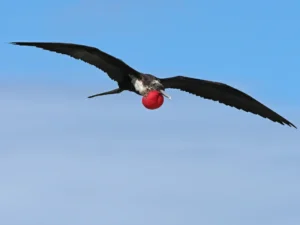
Frigatebirds are probably the best example. These seabirds can fly for weeks at a time over the ocean without landing.

Studies have shown they sleep while flying, though they only get about 42 minutes of sleep per day during these flights (compared to 12 hours when they’re on land).
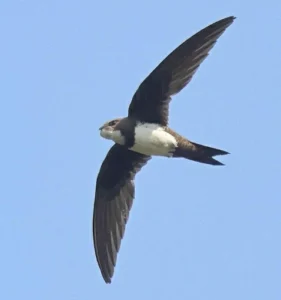
Alpine swifts are another amazing example. These birds migrate from Europe to Africa, and they can stay in the air for over 200 days straight. They eat, sleep, and even mate while flying. They only land to nest and raise babies.
Great frigatebirds have been tracked with special brain-monitoring equipment, and scientists confirmed they definitely sleep while flying. They usually do it while soaring on wind currents, which requires less active effort than flapping flight.
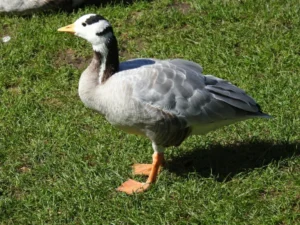
Bar-headed geese, which fly over the Himalayas during migration, might also be able to sleep while flying, though this is still being studied. The evidence suggests they at least do the half-brain sleep thing during parts of their journey.
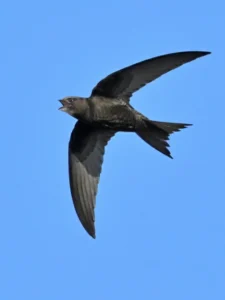
Common swifts spend almost their entire lives in the air. Young swifts that leave the nest might not land for 2-3 years until they’re ready to breed.
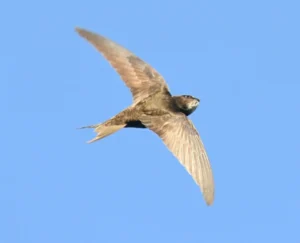
They have to sleep while flying because landing isn’t really an option for them.
When Do Birds Sleep While Flying?
Birds don’t sleep while flying all the time. They usually only do it when they absolutely have to.
During long ocean crossings, birds have no choice but to sleep on the wing. There’s nowhere to land, and stopping isn’t an option. So they catch quick naps while gliding or soaring to save energy.
At night during migration, some birds will do short periods of half-brain sleep while flying in the dark. This is risky because it’s harder to see obstacles, but if the bird is flying high over open terrain, the risk is lower.

During the day, birds are less likely to sleep while flying because the thermal currents and weather patterns make for better flying conditions. They’d rather use this time to make progress and save sleep for safer situations.
Birds that sleep while flying usually do it in very short bursts. We’re talking seconds to a few minutes at a time, not hours. They’ll close one eye, let half their brain rest for a bit, then wake that half up and switch to the other side.
The total amount of sleep birds get while flying is way less than what they’d get if they could land somewhere safe. So this isn’t their preferred way to sleep, it’s just what they do when they don’t have better options.
What’s Going On Inside a Bird’s Brain During Flight Sleep?
Scientists have actually studied this by putting tiny recording devices on birds’ heads to monitor their brain activity while flying.
When a bird sleeps with half its brain, that half shows the same slow brain waves that happen during deep sleep in fully sleeping animals. The other half shows the fast, active brain waves of being awake.

The sleeping half basically goes into maintenance mode. It’s recovering from the day’s activities, processing information, and doing all the restorative stuff that sleep is for. Meanwhile, the awake half is problem-solving, navigating, and keeping the bird alive.
What’s really interesting is that birds can control how deep the sleeping half goes. If they’re in a dangerous situation or bad weather, they keep the sleep lighter.
If conditions are good and they’re just soaring on steady wind, they let that half of the brain sleep more deeply.
The switch between which half is asleep happens pretty smoothly. There’s a brief moment where both halves might be awake together as they transition, then one half drops back into sleep mode.
This half-brain sleeping isn’t unique to birds, by the way. Dolphins and some other marine mammals do the same thing so they can surface to breathe while sleeping.
But birds were the first animals where scientists confirmed it happens during actual locomotion (movement).
How Birds Keep Flying While Part of Their Brain Is Asleep
Keeping your body in the air while part of your brain is asleep isn’t easy. Birds have some special adaptations that make this possible.
First, many of the birds that sleep while flying are gliders or soarers. They use air currents and thermals to stay up without flapping constantly.
Gliding takes way less energy and concentration than active flapping, which makes it easier to sleep.
The bird’s flight muscles have what’s called muscle memory. They can keep performing the basic motions of flight without constant conscious control from the brain. It’s similar to how you can walk without thinking about every step.
Birds also have incredible balance systems. Even with half their brain asleep, their inner ear and balance organs keep working to tell them which way is up and if they’re tilting.
The bird’s body position during flight-sleeping is usually pretty stable. They’re not doing complex aerial maneuvers while sleeping. They’re basically staying on a straight path at a steady altitude.
If something goes wrong (like turbulence or a sudden danger), the sleeping half of the brain can wake up really fast.
We’re talking fractions of a second. So the bird isn’t defenseless even while sleeping.
Can All Birds Sleep With Half Their Brain?
Even birds that can’t sleep while flying can still do the half-brain sleep thing. They just do it while perched or standing.
Ducks and geese often sleep with one eye open while floating on water or sitting in a group.
The ducks on the outside of the group keep one eye open watching for predators, while the ducks in the middle can sleep with both eyes closed.

Chickens and many other ground birds also use half-brain sleep when they’re roosting at night. This helps them stay alert to nighttime predators like foxes or owls.
Parrots in the wild sleep with half their brain active too. This is probably why pet parrots seem to notice everything even when they appear to be sleeping. One half of their brain really is awake and watching.
The difference is that these birds are doing half-brain sleep while stationary.
Using it during active flight is a whole different level of complexity that only certain species have mastered.
Why Most Birds Don’t Sleep While Flying
Flying takes a lot of energy. For most birds, it’s actually more efficient to land, sleep properly, and then continue flying after getting good rest.
Small songbirds that migrate at night will fly for several hours, then land before dawn to rest and feed. They get much better quality sleep this way than they would trying to sleep while flying.

Birds that have safe places to land don’t need to develop the ability to sleep while flying. It’s only birds that face open ocean or extremely long non-stop flights that had to evolve this ability.
The quality of sleep you get with half-brain sleep is lower than full sleep. Both halves of your brain need to fully shut down sometimes for the best recovery.
Birds that sleep while flying are basically running on less sleep than they’d like.
Also, sleeping while flying is risky. Even with half the brain awake, the bird’s reactions are slower and it’s easier to make mistakes.
If there are places to land safely, that’s always the better option.
The Downsides of Sleeping While Flying
Even though some birds can do it, sleeping while flying isn’t perfect. It comes with real costs.
The amount of sleep birds get while flying is way less than normal. Frigatebirds that normally sleep 12 hours a day only get about 42 minutes when they’re on long flights. That’s less than 6% of their normal sleep time.
This sleep deprivation adds up. When birds finally reach land after long flights where they had to sleep in the air, they usually crash hard and sleep for extended periods to recover.

The quality of half-brain sleep is lower than full sleep. Your brain needs complete rest sometimes to fully recover and process memories.
Birds that only do half-brain sleep for days at a time are basically running on fumes.
Flying while tired (even if you’re getting some half-brain sleep) increases the risk of accidents.
Tired birds might misjudge distances, fail to spot obstacles, or make poor decisions about weather conditions.
Energy-wise, staying awake with half your brain while flying still burns more calories than sleeping would. So birds are using up more of their precious fat reserves during these sleep-deprived flights.
How Did Scientists Figure Out Birds Can Sleep in the Air?
Figuring out that birds sleep while flying wasn’t easy. Scientists had to develop special equipment to track it.
Early evidence came from observing birds that stayed airborne for impossibly long periods. If swifts never land for years, they had to be sleeping somehow while flying.
The breakthrough came when researchers developed tiny data loggers that could be attached to birds’ heads. These devices measured brain activity, head movements, and even which eye was open or closed.
One famous study put these devices on frigatebirds in the Galápagos Islands.
The researchers tracked the birds’ brain waves during long flights over the ocean and confirmed they were definitely entering sleep states while staying airborne.
Video footage from drones and aircraft has also captured birds with one eye closed while flying, which is a strong indicator of half-brain sleep happening.
Scientists continue to study this because there’s still a lot we don’t know.
For example, how do birds decide when it’s safe to sleep while flying? How do they avoid collisions with other birds during migration while sleeping?
What This Discovery Tells Us About How Sleep Really Works
Birds sleeping while flying has changed how scientists think about sleep in general.
It proves that sleep doesn’t have to mean complete unconsciousness. You can get some of the benefits of sleep while still maintaining basic functions.
This has interesting implications for humans. Could we develop techniques to rest parts of our brain while keeping other parts active?
Probably not in the same way birds do (our brains don’t work like that), but understanding the biology might lead to new ideas.
It also shows how adaptable sleep can be. Sleep isn’t just one thing that works the same way for every animal.
Different species have evolved really different solutions to the problem of needing rest while also needing to stay safe or keep moving.
The study of birds sleeping while flying has helped researchers understand sleep disorders in humans better. If we know how birds manage with minimal sleep, it might give us clues about how human brains could cope with sleep deprivation.
Conclusion
Yes, some birds can sleep while flying, using a technique where half their brain sleeps while the other half stays awake.
This ability is mainly found in birds like frigatebirds, swifts, and other species that need to stay airborne for days or weeks at a time.
This isn’t their preferred way to sleep though. The quality and quantity of sleep they get while flying is way less than what they’d get with proper rest on land.
But when you’re crossing an ocean or migrating non-stop for days, sleeping while flying is better than not sleeping at all.
The fact that birds can do this shows just how adaptable and amazing these animals are. T
hey’ve evolved the ability to rest while doing one of the most energy-intensive activities possible (flying), which is something humans can barely imagine being able to do.

Hi, my name is Ezra Mushala, i have been interested animals all my life. I am the main author and editor here at snakeinformer.com.