
You’ve seen it in movies and read about it in history books. A small tube is attached to a bird’s leg, the bird is released, and it flies directly to its destination to deliver an important message. It seems almost magical.
In fantasy stories, birds deliver letters to wizards. In war movies, carrier pigeons fly across battlefields with secret messages. Even today, you might see trained birds at special events.
But can birds actually deliver messages in real life?
Yes, certain bird species, especially homing pigeons, can reliably deliver messages over long distances. They’ve been used for thousands of years for communication and were especially important in wars before radio and telephone were invented. Pigeons can fly home from hundreds of miles away, making them perfect for carrying messages.
Birds delivering messages isn’t just fantasy or ancient history.
It’s a real thing that actually works because of amazing navigation abilities that scientists are still trying to fully understand.
Humans Have Used Birds to Carry Messages for Thousands of Years
People have been using birds to carry messages for at least 3,000 years. Ancient civilizations in Egypt, Persia, and Rome all used pigeons for communication.
In ancient Greece, pigeons carried results from the Olympic Games to different cities. People would release pigeons with news of who won, and the birds would fly home with the information.
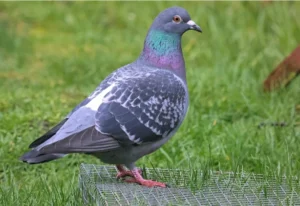
During wars throughout history, pigeons saved countless lives by delivering messages when no other communication was possible. In World War I and World War II, pigeons flew through gunfire and poison gas to carry important military messages.
One famous pigeon named Cher Ami saved nearly 200 American soldiers in World War I. The bird flew 25 miles in 25 minutes to deliver a message, even though it was shot and badly wounded. It lost an eye and a leg but still completed its mission.
Another pigeon named G.I. Joe saved a thousand British soldiers in World War II by warning them that an air strike had been called off. The bird flew 20 miles in 20 minutes.
Pigeons were so valuable in wars that armies had entire units dedicated to breeding, training, and caring for them. Both sides tried to shoot down enemy pigeons carrying messages.
Why Pigeons Turned Out to Be the Best Message Carriers
Not just any bird can deliver messages. You need a bird with very specific abilities, and pigeons have exactly what’s needed.
Homing ability is the most important thing.
Pigeons have an incredible ability to find their way home from unfamiliar locations hundreds of miles away. Scientists still don’t completely understand how they do it.
Pigeons can fly up to 600 miles in a single day.
They typically fly at speeds of 50 to 60 miles per hour. This makes them fast enough to deliver messages quickly but slow enough to have good endurance.

They have excellent vision and can see things humans can’t, including ultraviolet light and the Earth’s magnetic field. This helps them navigate.
Pigeons are tough.
They can fly in bad weather, at night, and through dangerous conditions. They don’t give up easily.
They’re easy to train and care for.
Unlike wild birds, pigeons are domesticated and comfortable around humans. They don’t require exotic food or complicated housing.
They’re reliable.
Once trained, pigeons will try to get home no matter what obstacles they face. They don’t get distracted or decide to go somewhere else.
How Do Pigeons Find Their Way Home From Hundreds of Miles Away?
The big question is: how does a pigeon know which way to fly when it’s released in a place it’s never been before?
Scientists think pigeons use multiple navigation systems working together. It’s like having several different GPS devices all helping at once.
The sun compass
The sun compass is one method. Pigeons can tell direction based on where the sun is in the sky. They somehow know what time it is and can figure out which way is home based on the sun’s position.
The magnetic compass
The magnetic compass is another tool. Pigeons can detect Earth’s magnetic field.
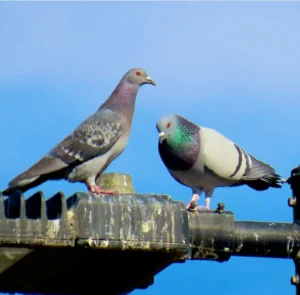
They have tiny magnetic particles in their beaks that act like built-in compasses. This works even on cloudy days when the sun isn’t visible.
Smell
Smell might play a role. Research suggests pigeons can smell their way home by detecting odors carried on the wind from their home area. Different places have different smell signatures based on the plants, soil, and other factors.
Landmarks
Landmarks help when pigeons get close to home. They recognize mountains, rivers, buildings, and other features they’ve seen before. This gives them precise directions for the final approach.
Sound
Sound might also be involved. Pigeons can hear very low-frequency sounds that travel long distances. They might hear sounds from their home area that help guide them.
The truth is that scientists still don’t have a complete answer. Pigeons are using information that humans can’t even sense, and they’re processing it in ways we don’t fully understand.
How People Train Pigeons to Carry Messages
You can’t just grab a random pigeon off the street and expect it to deliver messages. Message-carrying pigeons need specific training.
First, you need to raise pigeons in one location. This becomes their home base, the place they’ll always try to return to. Pigeons won’t go to random locations. They only fly to their home.
When the pigeons are young (around 6 to 8 weeks old), you start training. You take them a short distance from home (maybe a mile or two) and release them. They fly home.
Gradually, you increase the distance. First five miles, then ten, then twenty. Each time, the pigeons practice finding their way home from farther away.
Eventually, trained pigeons can find home from hundreds of miles away, even from places they’ve never been before. The training builds their confidence and strengthens their navigation skills.
To use the pigeons for messages, you attach a small, lightweight message container to the bird’s leg. The message has to be tiny and written on very thin paper because weight matters. Every extra gram makes flying harder.
You release the pigeon from wherever you are, and it flies home. Someone at home base removes the message from the bird’s leg when it arrives. That’s it. Simple but effective.
The Real Limits of Using Birds for Communication
Message-carrying pigeons are amazing, but they have real limitations that are important to understand.
One-way communication only.
Pigeons fly home. They can’t fly to random destinations. If you want to send a message back and forth, you need pigeons from both locations. Person A has pigeons that fly to Person B’s location, and Person B has pigeons that fly to Person A’s location.
They need to be transported to the release point.
Someone has to physically take the pigeon from its home to wherever the message needs to be sent from.
This means pigeons work best when you know in advance where you’ll need to send messages from.
Weather affects them.
Pigeons can fly in rain and wind, but extreme weather like heavy thunderstorms or blizzards can stop them. Some pigeons get disoriented in fog.
Predators are a danger.
Hawks, falcons, and eagles will kill pigeons during flight.

This was especially true in wars when enemy forces trained hawks to hunt message-carrying pigeons.
They get tired.
A pigeon can fly maybe 600 miles in one day, but that’s pushing it. For very long distances, the bird might need to rest and eat before completing the journey.
Not always perfect.
Some pigeons get lost. Some get injured or killed. Some just fail for unknown reasons. There’s always a chance the message won’t arrive. That’s why important messages were often sent with multiple pigeons.
Other Birds Humans Tried Using as Messengers
Pigeons are by far the most common message-carrying birds, but people have tried using other species too.
- Ravens and crows are extremely intelligent and can be trained for some tasks. Vikings supposedly used ravens to help navigate because the birds would fly toward land. But ravens aren’t as reliable as pigeons for message delivery.

- Swallows have homing ability, though not as strong as pigeons. Some cultures have tried using them, but they’re harder to train and less reliable.
- Eagles and hawks are too aggressive and difficult to train for message delivery. They’re predators, not messengers.
- Parrots are smart and can be trained, but they don’t have the homing instinct that pigeons do. They can learn to fly to specific places, but they need extensive training for each location.
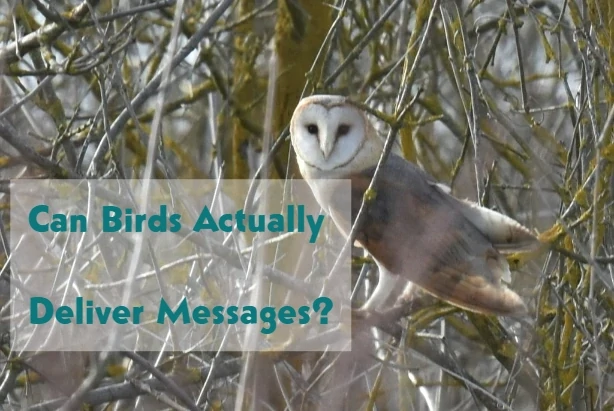
In fantasy fiction, owls deliver mail. But real owls are nocturnal hunters that are nearly impossible to train for message delivery. They don’t have homing ability like pigeons do.
The bottom line is that pigeons are really the only bird that works well for reliably carrying messages over long distances.
Do People Still Use Message-Carrying Birds Today?
You might think message-carrying pigeons are obsolete in the age of cell phones and internet. But they’re still used in some situations.
Racing is the most common use today.
Pigeon racing is a competitive sport where birds are released from far away and timed to see whose pigeon gets home fastest. There are clubs and competitions all over the world.
Emergency backup communication.
Some countries still maintain small numbers of trained messenger pigeons in case of total communication failure.

If an earthquake or other disaster destroys all electronic communication, pigeons could still work.
Remote areas.
In places with no cell phone coverage or internet, pigeons can still carry messages. Some hospitals in remote regions of India and Switzerland have used pigeons to transport medical samples and urgent messages.
Symbolic and ceremonial uses.
Pigeons are released at weddings, funerals, and other events. These are usually white doves (which are actually white pigeons) and it’s more for symbolism than actual message delivery.
Art projects and demonstrations.
Artists and educators sometimes use pigeons to demonstrate this historical communication method or to make statements about technology and nature.
What’s Actually Happening in a Pigeon’s Brain During Training
Training pigeons isn’t just about practice. There’s actual science happening in the bird’s brain as it learns.
Each time a pigeon successfully flies home, it strengthens the neural pathways involved in navigation. The bird’s brain is literally changing and improving with each flight.

Pigeons form detailed mental maps of their territory. The more flights they make, the more detailed these maps become. They remember landmarks, smell signatures, magnetic field variations, and other details.
Young pigeons are better at learning new routes than older ones, just like young brains in any species are more flexible. But even adult pigeons can learn if trained properly.
Pigeons that are trained in teams (released together) often do better than solo pigeons. They seem to learn from each other and share information about the route.
Why Humans Eventually Stopped Using Birds for Messages
If pigeons were so effective, why did we stop using them for communication?
Technology got better.
The telegraph, telephone, radio, and eventually the internet provided faster and more reliable communication. Pigeons can fly 60 miles per hour, but electronic signals travel at the speed of light.
Two-way communication became normal.
People expect instant back-and-forth conversations now. The one-way limitation of pigeons doesn’t work for modern communication needs.
Logistics were complicated.
You needed to breed, house, feed, and train hundreds or thousands of birds.

You needed people to care for them. The infrastructure required was significant.
Not reliable enough for critical situations.
A 90% success rate sounds good, but that means 1 in 10 messages never arrives. For life-or-death military decisions, that’s not acceptable when you have radio.
Cost wasn’t worth it anymore.
Once better technology existed, the time and money spent maintaining pigeon units couldn’t be justified.
Still, for many centuries, pigeons were the fastest way to send messages across distances. They played a real role in history.
Could Message-Carrying Birds Ever Be Useful Again?
Some people wonder if pigeons could be useful again if modern technology fails. What if there’s a massive solar storm that knocks out electronics, or an electromagnetic pulse, or some other catastrophe?
Pigeons would definitely still work in these scenarios. They don’t need electricity or satellites. They’re low-tech and reliable.
But realistically, we’re unlikely to go back to using them regularly. The advantages of modern communication are just too great. Even if cell towers are down, there are satellite phones, emergency radios, and other backup systems.
Pigeons are more likely to remain in the role they have now: a fascinating part of history, a competitive sport, and an occasional backup option for very specific situations.
What Using Pigeons Says About Bird Intelligence
Using pigeons to carry messages raises interesting questions about bird intelligence. How smart do you have to be to navigate hundreds of miles to a specific location?
Pigeons are actually quite intelligent. They can recognize individual human faces, learn complex patterns, and solve problems. Their navigation ability requires real cognitive processing, not just instinct.
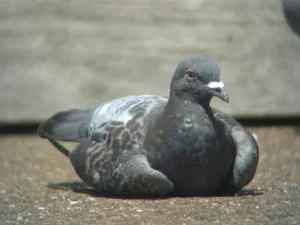
However, pigeons don’t understand that they’re carrying messages. They don’t know they’re helping with communication. From the pigeon’s perspective, someone took it away from home, and it’s just trying to get back to where it wants to be.
The genius of using pigeons for messages is that humans figured out how to harness the bird’s natural homing instinct for a purpose. The pigeon doesn’t need to be smart enough to understand the mission. It just needs to be smart enough to find home.
Conclusion
Birds can absolutely deliver messages in real life, and they’ve been doing it successfully for thousands of years. Homing pigeons are the champions of message delivery, with an incredible ability to find their way home from hundreds of miles away.
Pigeons were critical for communication throughout history, especially during wars when no other reliable communication existed. They saved thousands of lives by carrying urgent messages through dangerous conditions.
The navigation abilities of pigeons are still not completely understood by scientists. These birds use a combination of the sun, Earth’s magnetic field, smell, landmarks, and possibly other senses to find their way home from unfamiliar places.
Today, pigeons aren’t used much for message delivery because we have better technology. But they remain a fascinating example of how humans learned to work with nature, and they still have niche uses in some situations.
The next time you see a pigeon in a parking lot, remember that this “boring” city bird has abilities that scientists can’t fully explain and a history of saving lives by delivering critical messages.

Hi, my name is Ezra Mushala, i have been interested animals all my life. I am the main author and editor here at snakeinformer.com.