
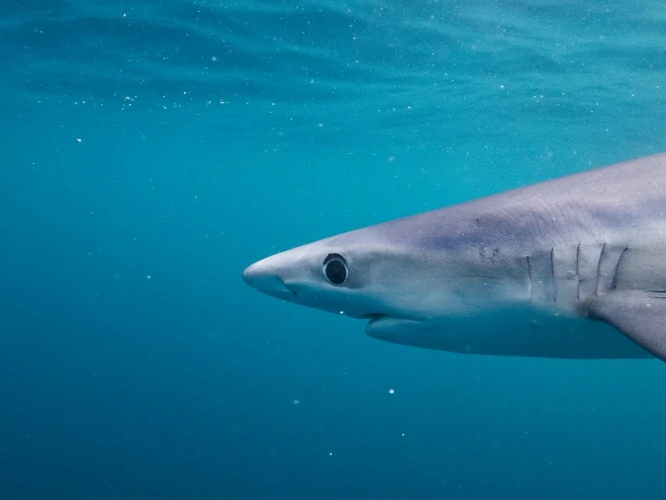
If you’ve ever watched a shark glide through an aquarium tank, you might have noticed something strange. They never seem to blink, and their eyes stay wide open all the time.
This leads to an interesting question about how these predators rest. Fish don’t have eyelids like we do, which makes you wonder how they handle sleep. Do sharks sleep with their eyes open?
Yes, sharks sleep with their eyes open because they don’t have eyelids (except for a few species with nictitating membranes that they rarely close). When sharks rest, their eyes stay open the entire time, but their brain activity slows down and they become less aware of their surroundings.
Sharks can’t close their eyes like you can before bed. Most species don’t even have movable eyelids. This means that whether they’re hunting, swimming, or resting, their eyes are always exposed and open.
But just because their eyes are open doesn’t mean they’re fully awake and alert. Sharks have developed their own way of resting that works without the need to close their eyes.
How Do Sharks Actually Sleep?
Shark sleep isn’t like human sleep at all. When you sleep, you lie down, close your eyes, and your brain goes through different sleep stages. Sharks can’t do any of that.
They don’t lie down (most of them have to keep moving), they can’t close their eyes, and their sleep is more like a reduced awareness state than actual unconsciousness.
Scientists who study shark behavior have found that sharks experience what’s called “restful wakefulness” or “sleep swimming.”
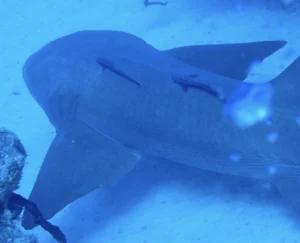
During these periods, sharks slow down their swimming speed and their brain activity decreases. They’re less responsive to things happening around them, and they might swim in repetitive patterns or find a spot with good water current where they can rest while still moving.
Some shark species can actually stop swimming and rest on the ocean floor. These are usually bottom-dwelling sharks like nurse sharks, wobbegongs, and leopard sharks.
They can pump water over their gills while staying still, so they don’t need to swim constantly to breathe. When these sharks rest, they might wedge themselves under a rock or in a cave, staying completely still except for the gentle movement of their gills.
But even then, their eyes stay wide open.
The sharks that have to keep swimming (like great whites and mako sharks) never fully stop moving. They enter a state where half their brain stays active to keep them swimming and breathing, while the other half rests.
It’s similar to how dolphins sleep. This way, they can rest while still doing the essential tasks needed to stay alive.
Why Sharks Don’t Have Eyelids
You might wonder why sharks evolved without eyelids when most land animals have them. The answer is pretty simple. They don’t really need them underwater.
Eyelids serve a few purposes for land animals. They keep your eyes moist, protect them from debris and dust, and give you a way to block out light when you sleep.
But if you live underwater, your eyes are already constantly moist. There’s no dust or pollen floating around. And blocking out light isn’t as important when you live in an environment where light levels naturally change with depth.
Sharks have other ways to protect their eyes. Many species have a thick, tough cornea that can handle the physical demands of ocean life.
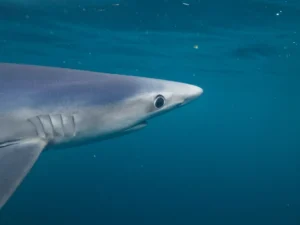
Some sharks have a special protective membrane called a nictitating membrane (basically a third eyelid) that slides across the eye during feeding or when the shark is in danger.
Great white sharks don’t have this membrane, so they actually roll their eyes back into their head when attacking prey to protect them.
The lack of eyelids also means sharks don’t blink. Blinking helps spread tears across your eye to keep it lubricated, but sharks don’t need to do this.
The ocean water constantly flowing over their eyes does the job for them. Their eyes are designed to stay open 24/7 without drying out or getting uncomfortable.
Do Sharks Have Eyelids at All?
Most sharks don’t have eyelids in the way you’d think of them. They can’t close their eyes voluntarily like you can. However, some shark species do have that nictitating membrane we mentioned earlier, which is kind of like an eyelid.
This nictitating membrane is a thin, translucent layer that sits in the corner of the eye and can slide across like a protective shield.
Tiger sharks, bull sharks, lemon sharks, and many other species have it. When the shark is attacking prey or something might hit its eye, the membrane slides across to protect it.
But here’s the thing: sharks don’t use this membrane when they’re resting or sleeping. It’s purely a protective device for dangerous situations.
A few shark species, like the great white, don’t have nictitating membranes at all. Instead, they’ve developed the ability to roll their entire eyeball back into the socket.
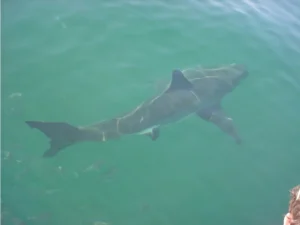
If you’ve ever seen footage of a great white attacking, you might notice its eyes suddenly go white just before impact. That’s the shark rolling its eye back to protect it. The white part you see is actually the back of the eye socket.
Even sharks with nictitating membranes don’t close them during rest periods. The membranes stay retracted in the corner of the eye, and the eye remains fully exposed and open.
So regardless of whether a shark has this protective membrane or not, it still sleeps with its eyes open.
How Scientists Know Sharks Are Actually Sleeping
You can’t just ask a shark if it’s sleeping, so how do scientists figure this out? It’s actually pretty interesting. Researchers have used several methods to determine when sharks are in a rest state versus when they’re actively alert.
One method involves watching their behavior patterns. Scientists noticed that sharks in aquariums (and some in the wild) have periods where they become less responsive to external stimuli.
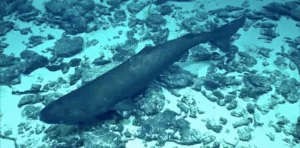
If you wave food in front of a resting shark, it might not react immediately like it normally would. The shark’s swimming pattern might become more automatic and repetitive, almost like it’s on autopilot.
Another method involves monitoring brain activity. In studies where researchers could safely attach monitoring equipment to sharks, they found periods of reduced brain activity that corresponded with these restful behaviors.
The sharks weren’t unconscious, but their brains definitely weren’t processing information at normal levels.
Scientists also look at metabolic rates. When sharks rest, their metabolism slows down slightly. They’re using less energy, which makes sense if they’re in a sleep-like state.
This has been measured in laboratory settings where sharks can be monitored closely.
Some of the most interesting research involves watching sharks in their natural habitat using underwater cameras.
Researchers have documented nurse sharks returning to the same resting spot day after day, sometimes sharing caves with other sharks. They’ll stay there for hours at a time, barely moving.
Meanwhile, other species have been filmed swimming slowly in circles or figure-eight patterns during nighttime hours when they’d normally be less active.
Which Sharks Can Stop Swimming to Rest?
Not all sharks need to keep swimming constantly, and the ones that can stop are often the sharks people see “sleeping” in documentaries.
These species have a different way of breathing that gives them more flexibility when it’s time to rest.
Nurse sharks are probably the best-known example. These bottom-dwelling sharks can pump water over their gills while staying completely still.
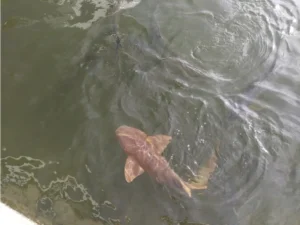
You’ll often find them resting under ledges or in caves during the day, sometimes piled up with other nurse sharks. They look completely relaxed, lying on the ocean floor with their eyes open, but they’re definitely in a rest state.
Wobbegongs (also called carpet sharks) do the same thing. These flat, camouflaged sharks spend most of their time lying on the bottom waiting to ambush prey.
When they’re not hunting, they rest in the same position. If you didn’t know better, you might think they’re just rocks with eyes.
Leopard sharks, angel sharks, and Port Jackson sharks can also rest on the bottom. They all have the ability to actively pump water through their gills, which means they don’t depend on swimming to breathe.
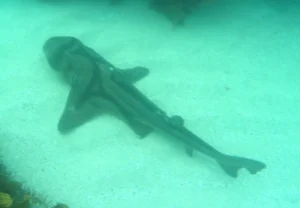
During rest periods, they find a comfortable spot, settle down, and stay there for hours. Their eyes stay open the whole time, but they’re definitely less aware of what’s going on around them.
These sharks tend to be more active at night, so if you see them during the day, there’s a good chance you’re looking at a resting shark.
They won’t move much unless something disturbs them, and even then, they might just shift position rather than swim away immediately.
Sharks That Have to Keep Swimming
On the other end of the spectrum, you have sharks that can’t stop swimming, even when they’re resting. These are usually the larger, more active shark species that live in open water. The reason they can’t stop comes down to how they breathe.
Great white sharks, mako sharks, salmon sharks, and whale sharks all fall into this category. These sharks use a breathing method called “ram ventilation,” which means they have to move forward to push water through their gills.
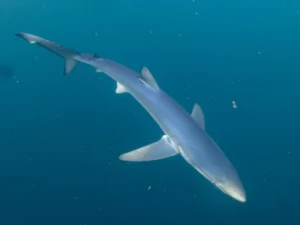
If they stop swimming, water stops flowing over their gills, and they can’t get enough oxygen. They’d basically suffocate.
So how do these sharks rest if they can’t stop moving? They’ve developed a pretty clever solution. Research suggests they use unihemispheric slow-wave sleep, which is the same thing dolphins do.
Basically, half of their brain sleeps while the other half stays awake to control swimming and breathing. Then they switch sides. This way, they can rest while still keeping their body in motion.
You’ll notice these sharks swimming more slowly during their rest periods. They might swim in lazy circles or figure-eight patterns, sometimes following ocean currents that help push water through their gills with less effort on their part.
They’re less reactive to their surroundings, and their movements become more automatic and repetitive.
Even during these rest periods, their eyes stay open. There’s no blinking, no closing, just constant openness. It might seem strange to us, but for these sharks, it’s completely normal.
They’ve been doing it this way for millions of years, and it works perfectly fine for their lifestyle.
What Happens to a Shark’s Eyes While Resting?
Since sharks can’t close their eyes, you might wonder if their eyes get tired or damaged from being open all the time. The short answer is no. Shark eyes are built to handle constant exposure to water and light without any problems.
The ocean water flowing over a shark’s eyes keeps them clean and moist. Small particles get washed away naturally, so there’s no buildup of debris.
The salt water also has some natural antibacterial properties, which helps prevent infections. Sharks don’t need tears or blinking to maintain eye health like land animals do.
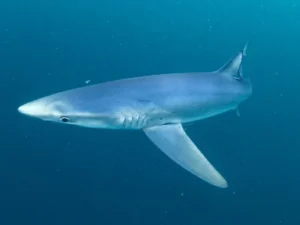
During rest periods, a shark’s eyes might be less responsive to movement. If something swims past a resting shark, the shark might not track it with its eyes like it normally would when alert.
The eyes just stare straight ahead, remaining open but not actively focusing on much of anything. This is one way scientists can tell a shark is in a rest state rather than actively hunting or patrolling.
Some sharks rest in darker areas (like caves or deeper water), which naturally reduces the amount of light hitting their eyes. But even sharks that rest in brighter conditions don’t seem bothered by the light.
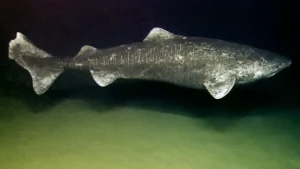
They don’t have eyelids to block it out, so they’ve adapted to just deal with whatever light level exists in their resting spot.
One interesting thing scientists have noticed is that some sharks position themselves facing into the current when they rest.
This ensures a steady flow of water over their gills (for breathing) and also over their eyes (for cleaning and moisture). It’s an efficient setup that takes care of multiple needs at once.
How Long Do Sharks Sleep?
The amount of time sharks spend sleeping (or in a rest state) varies by species and circumstances. It’s not like they have a strict 8-hour sleep schedule. Their rest patterns are more flexible and opportunistic.
Bottom-resting sharks like nurse sharks might spend a significant portion of the day in a rest state, especially if they’re nocturnal hunters.
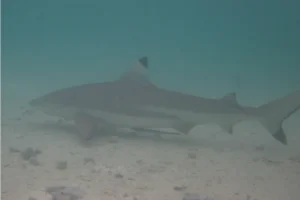
They’ll find a good spot in the morning and stay there for many hours, only becoming more active as evening approaches. During this time, they’re not deeply asleep, but they’re definitely less alert and using less energy.
Sharks that have to keep swimming don’t have long, continuous rest periods. Instead, they might have several shorter periods throughout a 24-hour cycle where they’re in that reduced awareness state.
They’re still moving, but they’re moving on autopilot while part of their brain rests.
Environmental factors affect sleep patterns too. If food is scarce, sharks might rest less and spend more time actively hunting. If they’ve just eaten a big meal, they might rest more while digesting.
Water temperature, season, and breeding cycles all play a role in how much and when sharks rest.
Scientists don’t have exact numbers for how many hours per day each shark species sleeps. It’s hard to measure precisely, especially in the wild.
But the general consensus is that sharks do need periods of reduced activity and awareness, even if those periods look very different from how humans or other mammals sleep.
Can You Tell If a Shark Is Sleeping by Looking at It?
If you’re diving or visiting an aquarium and you see a shark, you might wonder if it’s sleeping or awake. Since their eyes are always open, it’s not immediately obvious. But there are some clues you can look for.
First, check if the shark is moving. If it’s a bottom-dwelling species lying completely still on the ocean floor, especially in a cave or under a ledge, it’s probably resting.
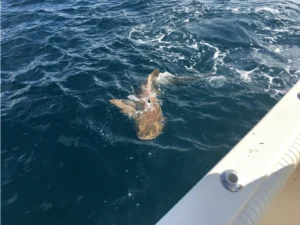
These sharks often return to the same resting spots, so if you see one in the same place at the same time of day repeatedly, that’s a good sign it’s a preferred rest location.
For sharks that swim continuously, look at their swimming pattern.
A resting shark usually swims more slowly and in repetitive patterns. It might swim in circles or figure-eights without much variation. An active, alert shark changes direction more frequently and swims with more purpose.
Watch how the shark responds to its environment. A resting shark is less reactive. If a fish swims nearby and the shark doesn’t immediately turn to look or investigate, it might be in a rest state.
An alert shark will track movement with its eyes and body, quickly responding to anything interesting in its environment.
Body position can give clues too. Some resting sharks position themselves facing into the current, which helps with breathing and requires less effort to maintain position.

They might also rest near the bottom or in areas with less activity, away from the busier parts of their territory.
Of course, you should never try to test if a shark is sleeping by touching it or getting too close. Even a resting shark can react quickly if it feels threatened, and disturbing a resting shark is stressful for the animal.
Just observe from a safe distance and appreciate the fact that you’re watching one of nature’s most successful predators in a rare, restful moment.
Conclusion
So do sharks sleep with their eyes open? Absolutely. Sharks don’t have eyelids (for the most part), so they can’t close their eyes even if they wanted to.
When sharks rest, their eyes stay wide open, but their awareness drops and their brain activity slows down.
Some species stop moving and rest on the ocean floor, while others keep swimming on autopilot with half their brain asleep.
It might seem strange to us that an animal could sleep with its eyes open, but for sharks, it’s completely normal.
They’ve been doing it successfully for hundreds of millions of years.
The next time you see a shark, remember that those open, unblinking eyes don’t necessarily mean the shark is watching you. It might just be catching some rest before its next hunt.

Hi, my name is Ezra Mushala, i have been interested animals all my life. I am the main author and editor here at snakeinformer.com.